Stop Watering on a Schedule: A Seasonal Approach Instead
The most common question is 'how often should I water this?' — and the honest answer is that the interval changes by a factor of three between July and January. Here is how to read it instead of counting days.
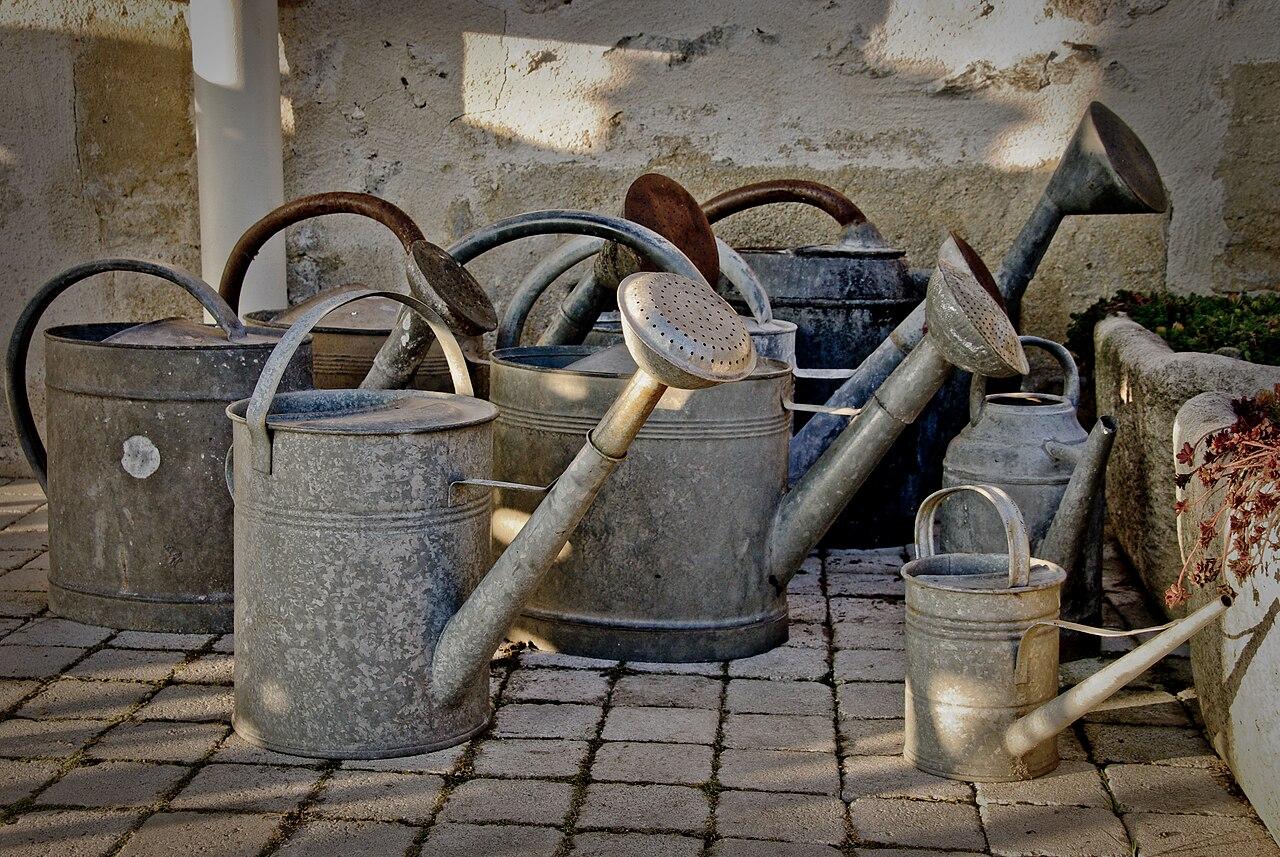
Photo: Watering can by Bas Leenders at https://www.flickr.com/photos/basl/ · CC BY-SA 2.0 · via Wikimedia Commons
01Why 'water every Sunday' fails
A plant's water use is not a property of the plant. It is the output of light, temperature, humidity, air movement, pot size, pot material and medium — and most of those change substantially between seasons.
The same pothos in the same pot in the same window can need water every five days in July and every eighteen days in January. A Sunday routine that is right in summer delivers roughly three times too much water in winter, which is why so many houseplants die in February.
The alternative is not complicated. Check before you water, and let the plant's actual state decide.
02What actually changes across the year
Two things drive the seasonal swing: how much the plant is growing, and how fast the medium dries.
In spring and summer, long bright days push active growth, the plant moves a lot of water through its leaves, and warm dry air pulls moisture out of the medium. Both effects point the same way — water often.
In autumn and winter, day length collapses, most tropical foliage plants slow to near-dormancy, and they draw very little from the pot. Central heating dries the air, which fools people into watering more, but that only affects the surface — the bulk of the medium below stays wet far longer than it looks.
| Plant | Summer | Winter |
|---|---|---|
| Pothos / philodendron | 5–7 days | 12–18 days |
| Monstera | 7–10 days | 14–21 days |
| Peace lily | 5–7 days | 10–14 days |
| Ficus / rubber plant | 7–10 days | 14–21 days |
| Snake plant | 3–4 weeks | 6–10 weeks |
| ZZ plant | 3–4 weeks | 8–12 weeks |
| Succulents | 10–14 days | 4–6 weeks |
| Ferns / calathea | 3–5 days | 7–10 days |
03How to water properly
Thoroughly and infrequently beats lightly and often, for every plant on the list above.
Pour slowly and evenly over the whole surface until water runs freely from the drainage hole, and keep going for a few seconds after it starts. This wets the entire root ball, flushes accumulated fertiliser salts out of the medium, and draws fresh air in behind the water as it drains.
Then empty the saucer. A pot standing in water re-wets from the bottom, the lower roots never get air, and you have created a slow root rot regardless of how careful the rest of your routine is.
A small splash every couple of days does the opposite of all of this: it wets only the top few centimetres, leaves the deep roots dry, and concentrates salts in the layer that never gets flushed.
- Top watering — The default. Fast, flushes salts, works for everything. Empty the saucer 15 minutes later.
- Bottom watering — Stand the pot in a few centimetres of water for 20–30 minutes until the surface darkens. Good for plants that hate wet foliage, and for very dry medium that repels water from above. Top-water occasionally anyway to flush salts.
- Never — Ice cubes, a fixed number of millilitres, or misting as a substitute for watering. None of these deliver water to the root ball in a useful way.
04Adjusting the routine, season by season
Rather than memorising numbers, change one habit at each turn of the year.
- Early spring — Growth restarts. Start checking more often and resume feeding at half strength. This is also the repotting window.
- Summer — Peak demand. Check every few days; move plants away from glass that gets fiercely hot, and expect small pots on a sunny sill to need water almost daily.
- Autumn — The critical transition. As days shorten, deliberately stretch the interval and stop feeding. Most winter losses are set up by autumn habits that were never adjusted.
- Winter — Check, do not water by default. Watch for cold draughts and radiator heat, both of which stress plants far more than a slightly dry pot.
05Reading the symptoms
Over- and underwatering can look confusingly similar, because both end with a plant that cannot take up water — one because it has none, the other because its roots have rotted.
The distinguishing test is the medium. Wilting in dry medium is thirst, and the plant recovers within hours of a thorough watering. Wilting in wet medium is root rot, and watering it makes things worse.
| Symptom | Underwatered | Overwatered |
|---|---|---|
| Medium | Dry, sometimes shrunken from the pot sides | Damp or soggy, sometimes smells sour |
| Leaves | Crisp, dry brown edges | Soft, yellowing, limp |
| Leaf drop | Older leaves first, dry and papery | Any age, often still green |
| Recovery | Hours after watering | Only after root surgery |
| Soil surface | Pale, pulling away from the pot | Green algae or white mould |
Frequently asked questions
- Are moisture meters worth buying?
- The cheap two-prong ones read electrical conductivity and are affected by fertiliser salts as much as by water — they routinely read 'moist' in dry medium. A wooden skewer is more accurate and free.
- Should I use tap water?
- For most plants, yes. Exceptions are calatheas, spider plants and carnivorous plants, which are sensitive to fluoride and chlorine — use filtered or rainwater for those. Leaving tap water out overnight removes chlorine but not fluoride.
- What about when I go on holiday?
- Water thoroughly, move plants out of direct sun into medium light, and group them together to raise local humidity. Most foliage plants handle two to three weeks fine. Skip the elaborate wick systems, which usually keep the medium far too wet.
Lan Nguyen
Balcony grower & founding editor
Lan has kept ornamental plants on a 12 m² apartment balcony for eight years, mostly tropical foliage and small-scale bonsai. She writes the care and comparison guides here, and has killed enough plants to be specific about how.
Keep reading
How to Read the Light in Your Home Honestly
Every care label says 'bright indirect light' and almost nobody knows what that means in an actual room. Here are three ways to measure it without buying anything.
Feeding Houseplants: Less Often Than You Think
Fertiliser is not plant food and it does not fix an unhappy plant. It replaces the nutrients a pot runs out of — and giving more than that does measurable harm.
Repotting: How to Tell When, and How Not to Overdo It
Most people repot too early, too often, and into pots that are far too big. Each of those makes root rot more likely, not less.