Feeding Houseplants: Less Often Than You Think
Fertiliser is not plant food and it does not fix an unhappy plant. It replaces the nutrients a pot runs out of — and giving more than that does measurable harm.
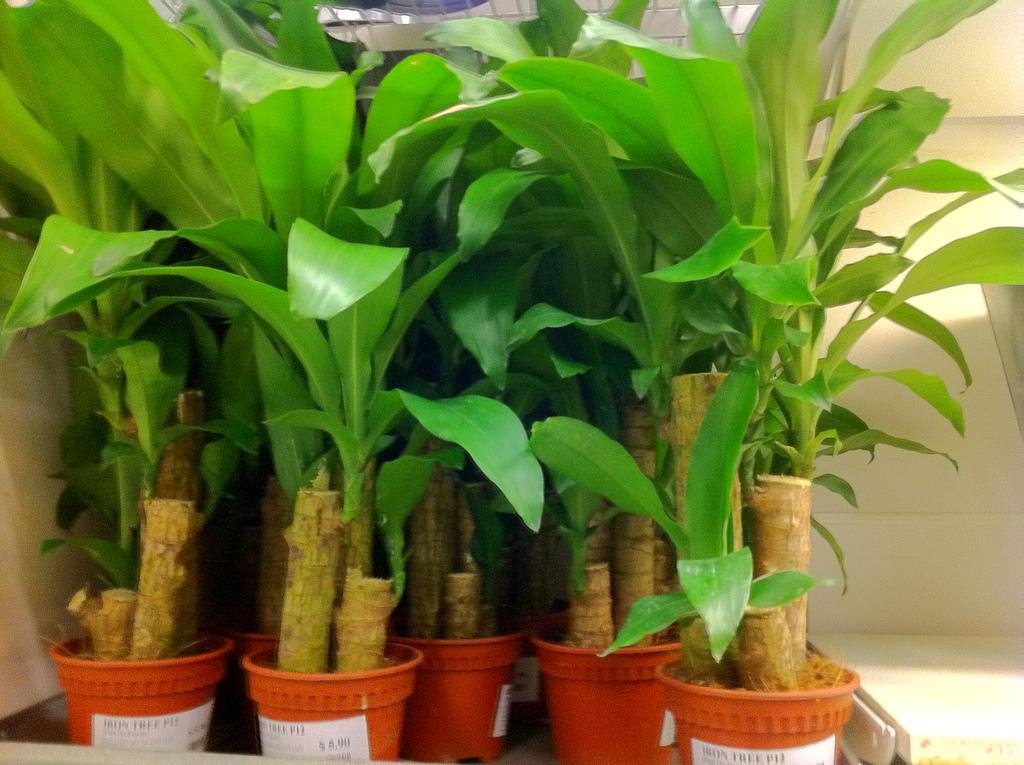
Photo: Dracaena fragrans by rojypala · CC BY 2.0 · via Wikimedia Commons
01What fertiliser actually is
Plants make their own food through photosynthesis, using light, water and carbon dioxide. Fertiliser supplies the mineral nutrients they also need — nitrogen, phosphorus, potassium and a set of trace elements — which in nature come from soil and decaying organic matter.
In a pot, that supply is finite. Every watering leaches some out through the drainage hole, and the plant consumes the rest. After roughly two to three months, a fresh bag of potting compost is largely depleted, which is when feeding starts to matter.
This framing explains the most important rule: fertiliser is a top-up for a growing plant, not a treatment for a sick one. Feeding a plant that is failing from low light or root rot adds stress to a plant that cannot process it.
02Reading the label
Every fertiliser carries three numbers — the N-P-K ratio, giving the percentage by weight of nitrogen, phosphorus and potassium.
Nitrogen drives leaf and stem growth, phosphorus supports roots and flowering, and potassium regulates general function and stress tolerance. For foliage houseplants, a balanced formula such as 10-10-10 or 20-20-20 diluted appropriately covers essentially everything.
Specialist formulas are mostly marketing for the indoor grower. The genuine exceptions are orchids, which want a weak balanced feed at every watering, and cacti and succulents, which do better on a lower-nitrogen mix that does not push soft growth.
| Type | How to use | Best for |
|---|---|---|
| Liquid concentrate | Dilute and apply with watering, every 2–4 weeks in season | Most houseplants — easiest to control |
| Slow-release granules | Mix into the medium or scatter on top, lasts 3–6 months | Larger pots, people who forget |
| Fertiliser spikes | Push into the medium | Convenient but distributes unevenly; can burn nearby roots |
| Organic (worm castings, seaweed) | Top-dress or dilute | Gentle, hard to overdo, slower acting |
03How much and how often
Manufacturer dosages assume vigorous plants in good light. Most indoor plants are neither, so half strength is the sensible default.
Through spring and summer, feed every two to four weeks at half strength for foliage plants in reasonable light. In autumn, taper off. Through winter, stop entirely for almost everything — a plant that is not growing cannot use nutrients, and the surplus accumulates in the medium as salts.
The exception is a plant under a grow light that keeps growing through winter. If it is producing new leaves, keep feeding it at a reduced rate.
- Fast growers in bright light — Pothos, monstera, ficus: every two weeks at half strength through spring and summer.
- Slow growers or dim positions — ZZ, snake plant, cast iron plant: once or twice a season at quarter strength, or not at all.
- Succulents and cacti — Two or three times over the whole growing season, at half strength, with a low-nitrogen formula.
- Always — Water the plant first, then feed. Fertiliser applied to bone-dry medium burns roots directly.
04Overfeeding and salt build-up
Excess fertiliser does not simply pass through. Mineral salts accumulate in the medium, raising its concentration until it starts pulling water out of the roots rather than the other way round. The plant then shows drought symptoms while sitting in wet medium.
The visible signs are a white or yellowish crust on the medium surface and around the drainage hole, brown crispy leaf tips and margins, wilting despite adequate moisture, and sudden leaf drop after a feed.
The fix is to flush. Take the pot to a sink and run lukewarm water slowly through it for several minutes, letting it drain freely — roughly four times the pot's volume. Do this every three to four months as routine maintenance, not only when there is a problem. If build-up is severe, repot into fresh medium instead.
05When feeding is not the answer
Pale, yellowing leaves are usually a light or water problem, not a nutrient one. Diagnose in that order: light first, then watering and roots, then nutrients.
Genuine deficiency in a houseplant looks specific rather than general. Uniform yellowing of older leaves suggests nitrogen; yellowing between the veins while the veins stay green suggests iron or magnesium, common in plants that have been in the same medium for years.
If a plant has been in the same pot for more than two years and looks tired despite good light and watering, repotting into fresh medium is usually more effective than any amount of fertiliser.
Frequently asked questions
- Can I use coffee grounds or eggshells?
- Not usefully in a pot. Coffee grounds compact and can encourage mould, and eggshells release calcium far too slowly to matter. Both work in an outdoor compost heap; neither is a houseplant fertiliser.
- Do I need to feed a plant I just bought?
- No. Nursery plants are grown with slow-release fertiliser in the medium and arrive well fed. Wait two to three months, and longer if you repot it.
- Is organic fertiliser better?
- Not chemically — plants absorb the same ions either way. Organic sources release more slowly and are harder to overdose, which is a genuine practical advantage indoors, but some have an odour.
Marcus Hale
Contributor — soil & propagation
Marcus spent six years in a wholesale nursery mixing media by the cubic metre before moving to container growing at home. He covers potting mixes, repotting and the unglamorous half of plant care.
Keep reading
Stop Watering on a Schedule: A Seasonal Approach Instead
The most common question is 'how often should I water this?' — and the honest answer is that the interval changes by a factor of three between July and January. Here is how to read it instead of counting days.
How to Read the Light in Your Home Honestly
Every care label says 'bright indirect light' and almost nobody knows what that means in an actual room. Here are three ways to measure it without buying anything.
Repotting: How to Tell When, and How Not to Overdo It
Most people repot too early, too often, and into pots that are far too big. Each of those makes root rot more likely, not less.