Repotting: How to Tell When, and How Not to Overdo It
Most people repot too early, too often, and into pots that are far too big. Each of those makes root rot more likely, not less.
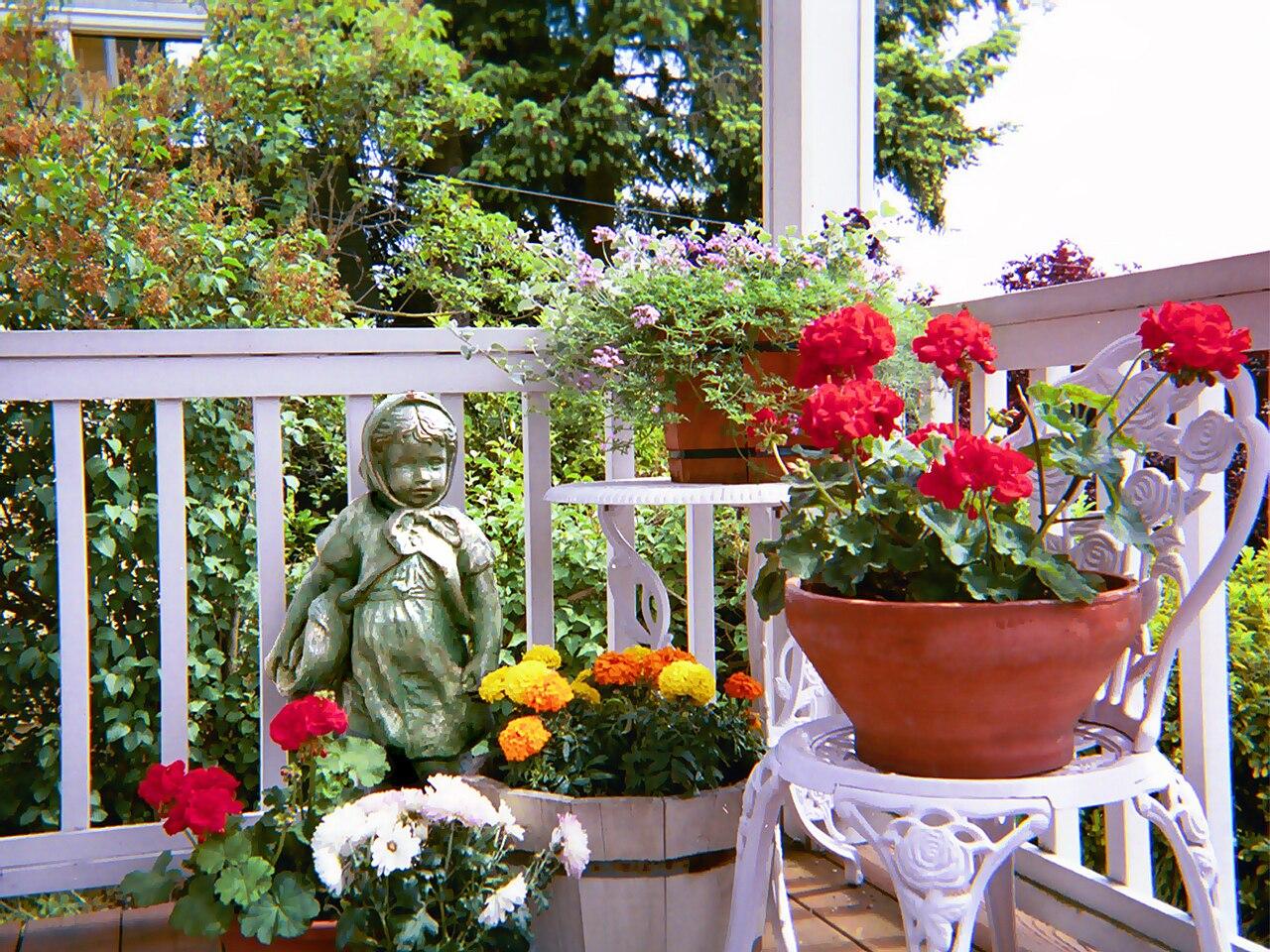
Photo: Container garden by Shakespeare at English Wikipedia · CC BY-SA 3.0 · via Wikimedia Commons
01The oversized pot problem
The instinct when repotting is to give the plant room to grow. In a pot, that is precisely wrong.
Roots can only take water from the medium they occupy. Surround a small root ball with a large volume of fresh medium and most of that volume holds water that no root ever reaches. It stays saturated for weeks, oxygen never returns to it, and anaerobic conditions develop around the outside of the root ball.
The plant then rots from the outside in, and because the symptoms appear weeks after the repot, people rarely connect the two. This is the single most common self-inflicted houseplant death.
02When a plant genuinely needs repotting
Look for two or three of these together rather than acting on any single one.
- Water runs straight through — You water and it appears at the drainage hole almost immediately. The pot is more root than medium.
- It dries out unusually fast — A plant that needed water weekly now needs it every two days, with no change in season or position.
- Roots circling the surface or the base — Visible on top of the medium, or wrapped tightly around the root ball when you slide the pot off.
- Growth has stopped despite good conditions — No new leaves through a whole growing season, with light and watering unchanged.
- The plant is unstable — Top-heavy enough to tip the pot, or being pushed upward out of it by its own roots.
- Not a reason on its own — A few roots poking through the drainage hole. That is normal and happens long before a plant is genuinely pot-bound.
03The procedure
Repot in spring or early summer. A plant with light and warmth on its side recovers in weeks; the same operation in November leaves damaged roots sitting in cold wet medium for months.
Water the plant thoroughly a day beforehand. A hydrated root ball holds together and separates more cleanly than a dry one.
- 1. Remove the plant — Squeeze a plastic pot to loosen it, or run a knife around the inside of a rigid one. Support the base of the stem and tip it out — never pull the plant free by its stem.
- 2. Inspect the roots — Healthy roots are firm and pale. Cut away anything brown, soft or smelling sour with clean scissors.
- 3. Loosen circling roots — Tease the outer roots free with your fingers. If they have formed a dense mat, make three or four shallow vertical cuts down the sides — this feels drastic and prompts new outward growth.
- 4. Pot up — Put enough fresh medium in the base that the plant sits at the same depth as before, fill around the sides, and firm gently. Leave 2 cm below the rim for watering.
- 5. Water and wait — Water thoroughly, keep the plant out of direct sun for a week or two, and do not feed for a month.
04How often, by plant type
Frequency depends on growth rate far more than on age, and slowing down is usually the right instinct.
| Plant | Interval | Notes |
|---|---|---|
| Pothos, philodendron | 1–2 years | Fast growers; can be divided instead |
| Monstera | 1–2 years while young | Add the moss pole at repotting time |
| Ficus | 2–3 years | Top-dress once too large to handle |
| Snake plant, ZZ | 3–4 years | Genuinely happy crowded; wait for the pot to bulge |
| Peace lily | 2–3 years | Flowers better slightly pot-bound |
| Succulents | 2–3 years | Repot into dry mix and wait a week before watering |
| Christmas cactus | 3–4 years | Blooms best when snug |
05Alternatives to repotting
Top-dressing suits large plants that are too heavy to move. Scrape off the top 3–5 cm of old medium each spring and replace it with fresh — it renews nutrients and improves surface drainage without disturbing the roots.
Potting back on is the option when a plant is pot-bound but you do not want it any larger. Remove it, trim the outer root mass by up to a third, and return it to the same pot with fresh medium. This is exactly what bonsai practice does, and most houseplants tolerate it well in spring.
Dividing works for clumping plants — snake plants, peace lilies, spider plants, calatheas. Pull or cut the clump into sections, each with roots and several leaves, and pot each separately. It solves the size problem and gives you more plants.
Frequently asked questions
- Should I put stones in the bottom for drainage?
- No. A coarse layer under finer medium actually raises the saturated zone within the root area rather than lowering it. Use a well-draining mix throughout and a pot with a hole.
- My plant wilted right after repotting. What went wrong?
- Probably nothing. Transplant shock from disturbed roots is normal. Keep it out of direct sun, water once thoroughly, and wait — most plants recover within one to two weeks.
- Can I reuse old potting medium?
- Partly. Mix no more than a third of old medium into fresh, and only from a plant that had no pest or disease problem. Old medium is depleted, compacted and can carry fungus gnat larvae.
Marcus Hale
Contributor — soil & propagation
Marcus spent six years in a wholesale nursery mixing media by the cubic metre before moving to container growing at home. He covers potting mixes, repotting and the unglamorous half of plant care.
Keep reading
Stop Watering on a Schedule: A Seasonal Approach Instead
The most common question is 'how often should I water this?' — and the honest answer is that the interval changes by a factor of three between July and January. Here is how to read it instead of counting days.
How to Read the Light in Your Home Honestly
Every care label says 'bright indirect light' and almost nobody knows what that means in an actual room. Here are three ways to measure it without buying anything.
Feeding Houseplants: Less Often Than You Think
Fertiliser is not plant food and it does not fix an unhappy plant. It replaces the nutrients a pot runs out of — and giving more than that does measurable harm.