Tap Water and Houseplants: When It Matters and When It Doesn't
Most plants drink tap water for years without complaint. A specific handful react badly to fluoride, chloramine and hard water — and they happen to be some of the most commonly owned plants there are.
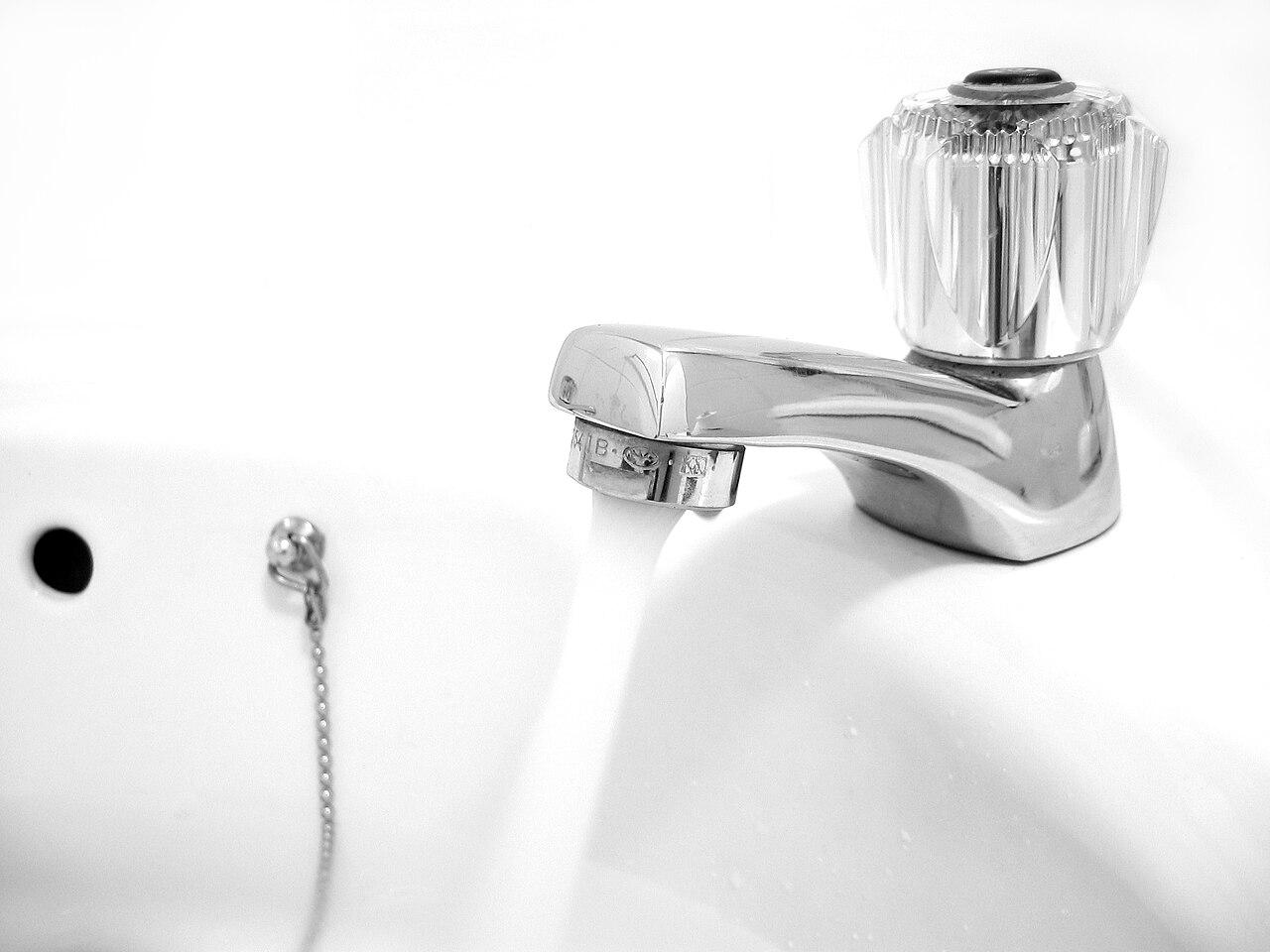
Photo: Tap water by Matthew Bowden www.digitallyrefreshing.com · Attribution · via Wikimedia Commons
01Four different things people mean by 'bad water'
The advice to avoid tap water is repeated everywhere without distinguishing between four unrelated properties, which is why it seems to contradict itself. Your supply may have any combination of them, and the fixes are different.
- Chlorine — Added as a disinfectant. It is volatile, so it off-gasses from standing water within a day, and at municipal concentrations it does little harm to established plants anyway.
- Chloramine — Chlorine combined with ammonia, increasingly used in place of chlorine because it is more stable in the pipes. That stability is the problem: it does not off-gas, so leaving water to stand achieves nothing.
- Fluoride — Added in some countries for dental health. Plants accumulate it and deposit it at the leaf margins, where it kills the tissue. This is the cause of the classic brown tip on spider plants and dracaenas.
- Hardness — calcium and magnesium — Dissolved minerals from the geology of the supply. Not toxic, but they build up in the medium, raise pH over time, and leave white deposits on leaves, pots and the soil surface.
02Which plants actually care
Most houseplants tolerate ordinary tap water indefinitely. Pothos, philodendron, monstera, sansevieria, ZZ, ficus, succulents and cacti are all effectively indifferent to it, and buying distilled water for them is a waste of money and effort.
The sensitive group is small and specific, and unfortunately it includes some very popular plants. Spider plants and dracaenas are the classic fluoride-sensitive species; cordylines join them; calatheas, marantas and their relatives react to fluoride, chlorine and hardness alike; and carnivorous plants are in a category of their own, requiring pure water because they evolved in nutrient-poor bogs.
The tell is consistent: a narrow, crisp, dark brown margin at the very tip of the leaf, often with a thin yellow band behind it, appearing on leaf after leaf regardless of watering and humidity. It develops over months and it never reverses on affected leaves.
It is worth being sceptical here, though, because the same symptom has three other common causes. Fertiliser salt build-up produces near-identical tipping, as does chronic underwatering, as does very dry air on thin-leaved species. Before blaming your water, ask whether you have been feeding a slow-growing plant, or letting it dry out hard between waterings.
| Plant group | Tap water | Best alternative |
|---|---|---|
| Aroids, ficus, succulents, cacti, most foliage | Fine | None needed |
| Spider plant, dracaena, cordyline | Causes tip burn over months | Filtered, rain or distilled |
| Calathea, maranta, ctenanthe, stromanthe | Causes edge burn | Rainwater or filtered |
| Orchids, ferns | Usually fine; hard water builds crust | Rainwater if hard |
| Azalea, gardenia, camellia, blueberry | Hard water raises pH over time | Rainwater |
| Carnivorous plants | Harmful | Rain, distilled or reverse osmosis only |
03The options, ranked by usefulness
Rainwater is the best answer and the cheapest. It is naturally soft, free of fluoride and chlorine, slightly acidic, and it costs nothing but a butt under a downpipe. Keep it covered to limit algae and mosquito larvae, use it within a few weeks in warm weather, and do not collect run-off from a newly treated or heavily mossy roof.
Filtered water is the practical everyday option. A jug filter or an under-sink carbon block removes chlorine, improves taste and reduces some contaminants — but note that standard carbon filters remove little or no fluoride and do not soften water. If fluoride is your specific problem, only reverse osmosis or distillation removes it reliably.
Distilled or deionised water is genuinely pure and genuinely inconvenient to buy in quantity. It is the right answer for carnivorous plants and a small fussy collection, and impractical for a room full of pots.
Standing water overnight is worth doing only if your supplier uses free chlorine. Check your water company's quality report — most publish which disinfectant they use. If it is chloramine, standing water is a ritual with no effect.
One thing not to use: water from a domestic ion-exchange softener. It works by swapping calcium for sodium, and sodium in the root zone is considerably worse for plants than the hardness it replaced. Take water for plants from the unsoftened tap, usually the kitchen cold tap.
04Temperature, and other things about water that do matter
Water temperature is more consequential than most people assume, and it costs nothing to fix. Cold water straight from the tap onto warm tropical roots causes a brief shock, and on some plants — African violets in particular — cold water on the leaves leaves permanent pale rings. Use tepid or room-temperature water.
Time of day matters slightly. Watering in the morning lets the medium and any splashed foliage dry through the day, which reduces fungal problems and fungus gnat activity. Evening watering is not harmful, but it keeps everything wet overnight in a cool room.
How you water matters far more than what you water with. A thorough soak until water runs from the base, followed by emptying the saucer, does more for a plant than any upgrade in water quality. Small frequent sips leave the lower root ball dry and concentrate salts in the middle of the pot.
Finally, the white crust that appears on terracotta and on the surface of the medium is worth reading rather than scrubbing away and forgetting. It is a mixture of carbonates from hard water and salts from fertiliser, and if it is accumulating quickly you are either in a hard-water area, feeding too much, or not flushing — and quite often all three.
05Deciding what to do, without overcomplicating it
Start by finding out what is actually in your supply. Water companies publish hardness and disinfectant type by postcode, and it takes five minutes. Soft water with chlorine disinfection means you have essentially nothing to worry about. Hard water with chloramine and fluoridation means the sensitive plants above will struggle on tap water.
Then match the effort to the plants. It is entirely reasonable to water the aroids and succulents from the tap and keep a can of rainwater for the calathea and the spider plant. Treating a whole collection as if it were carnivorous is a lot of effort for no gain.
Give any change several months before judging it. Damaged leaves never recover, so improvement shows only in leaves that emerge after the switch, and on a slow-growing plant that can take a whole season.
And keep the diagnosis honest. If a plant has brown tips and you have been feeding it monthly all winter in a dim room, the water is not the problem.
Frequently asked questions
- Is boiled water any good for plants?
- Boiling drives off chlorine and precipitates some temporary hardness, but it concentrates everything else as water evaporates, and it does nothing for fluoride. It is not a useful routine.
- Can I use water from a dehumidifier or air conditioner?
- Condensate is essentially distilled and works well, provided the unit is clean. Do not use it for edibles, since it can pick up traces of metals and biofilm from the machine.
- Is aquarium water good for plants?
- Yes — old tank water from a freshwater aquarium is dechlorinated and carries a little dissolved nitrogen, which makes it a genuinely useful mild feed. Do not use water from a marine tank.
- My spider plant still has brown tips on filtered water. Why?
- Standard carbon filters do not remove fluoride. If that is the cause, you need rainwater, distilled or reverse osmosis water — or accept the tipping and trim it along the leaf taper.
Marcus Hale
Contributor — soil & propagation
Marcus spent six years in a wholesale nursery mixing media by the cubic metre before moving to container growing at home. He covers potting mixes, repotting and the unglamorous half of plant care.
Keep reading
What Actually Changes for Houseplants Between October and March
Winter care is not a separate discipline. One variable moves — light — and watering, feeding, growth and pest pressure all follow it. Get the causal order right and the seasonal advice writes itself.
Stop Watering on a Schedule: A Seasonal Approach Instead
The most common question is 'how often should I water this?' — and the honest answer is that the interval changes by a factor of three between July and January. Here is how to read it instead of counting days.
How to Read the Light in Your Home Honestly
Every care label says 'bright indirect light' and almost nobody knows what that means in an actual room. Here are three ways to measure it without buying anything.