String of Pearls and the Other Trailing Succulents That Keep Dying
Curio rowleyanus is bought on sight and lost within months, almost always the same way: a deep pot, a shaded shelf, and water reaching a stem that was never meant to be wet.
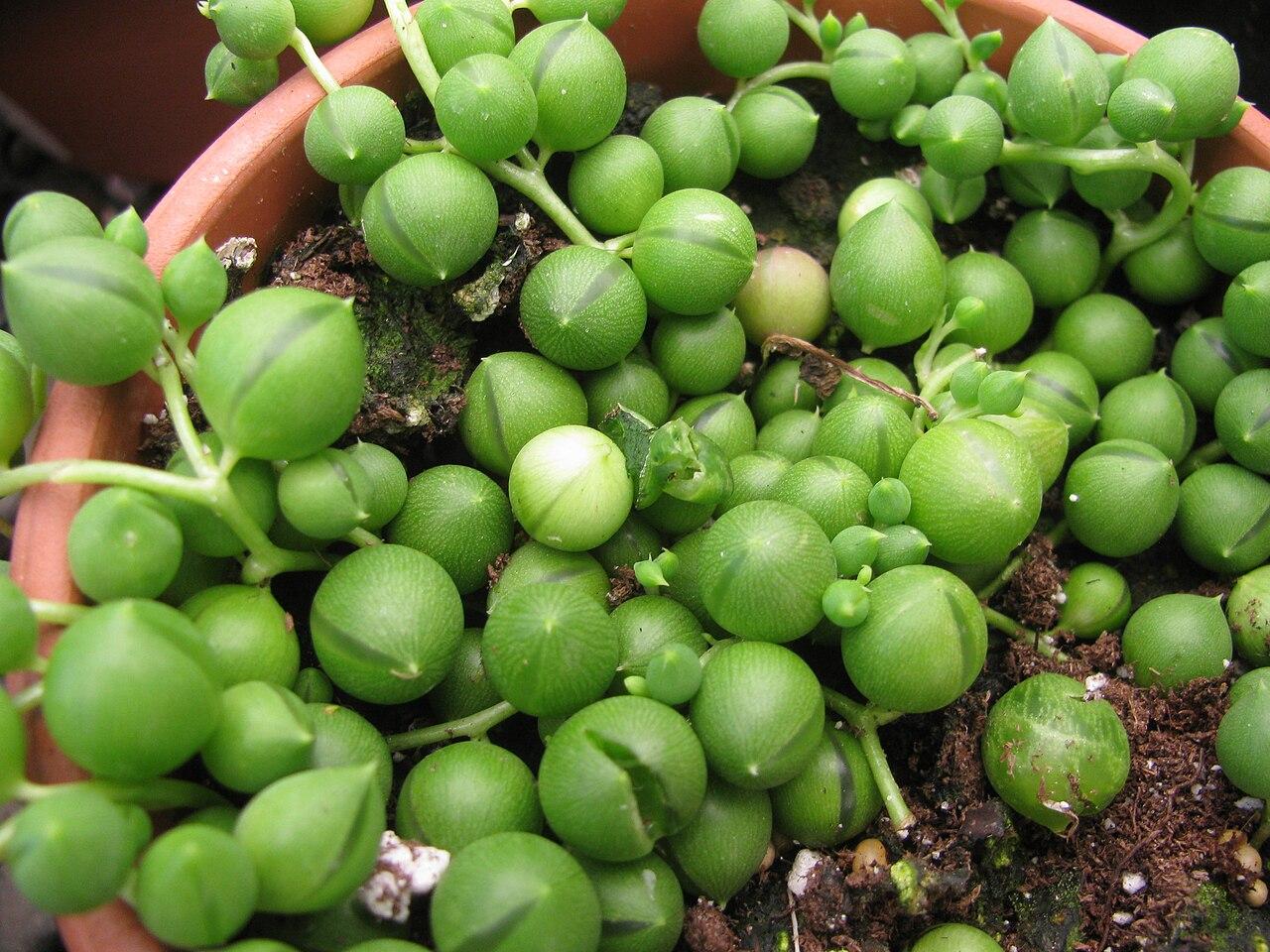
Photo: Curio rowleyanus by Flickr user Forest and Kim Starr · CC BY 2.0 · via Wikimedia Commons
01What it is, and why it behaves unlike other succulents
String of pearls — recently moved from Senecio to the genus Curio, so both names appear on labels — is a creeping succulent from arid parts of southern Africa. In the wild it does not hang. It sprawls across the ground and between rocks, rooting into the soil wherever a node touches, forming a mat in the partial shade of larger plants.
That growth habit explains almost everything about how it fails indoors. The stems are thin, the roots are shallow and fine, and the plant is adapted to a substrate that dries within a day or two. Hung in a deep pot of ordinary compost, the base stays wet for a fortnight, and the fine roots and the buried stem sections rot first — which is why these plants so often die from the centre outwards while the trailing ends still look fine.
The spherical leaves are the other distinctive feature. A sphere has the lowest possible surface area for its volume, which minimises water loss. Each pearl carries a translucent line — the epidermal window — that lets light into the interior of an otherwise opaque leaf. It is an elegant adaptation and it also means the plant is genuinely built for bright conditions, not the dim corners it usually ends up in.
02The pot is most of the problem
Use a shallow, wide pot, and use terracotta if you can. The roots occupy only the top few centimetres, so anything deep is a reservoir of permanently damp medium sitting under the plant with nothing drawing on it.
The medium should be sharply draining and mostly mineral: about a third peat-free or cactus compost to two-thirds coarse grit, pumice or perlite. Standard houseplant compost, on its own, holds water far too long for this plant.
Hanging pots complicate matters, because you cannot see the medium easily and you are unlikely to lift the pot to feel its weight. If it hangs, take it down to water it, let it drain fully, and put it back — never water it in place with the saucer built in.
The plant is also fragile in a way that matters practically. Strands snap easily, and every broken strand is both a small wound and, incidentally, a free cutting. Site it where it will not be brushed past.
03Light and water
Give it bright light with two to four hours of direct sun — an east window, or back from a south or west one. Full unfiltered afternoon sun through glass can scorch the pearls, but too little light is by far the more common error and produces a distinctive result: long bare stretches of stem with small, widely spaced pearls.
Water thoroughly, then let the medium dry out completely. In a bright warm room that means roughly every two to three weeks in summer, and every four to six weeks in winter. The plant will not tell you it is thirsty until it is quite thirsty, and it recovers well from that; it does not recover from a fortnight of wet medium.
Read the pearls. Firm and round means well hydrated. Slightly shrivelled, with a pointed tip and a faint dimple, means it is ready for water and will plump up within a couple of days of a soak. Squashy, translucent, splitting or yellowing pearls mean too much water and, usually, rot already underway at the roots.
Feed very sparingly — half-strength cactus feed two or three times through the growing season. Overfeeding produces soft, elongated growth that never looks right.
| Plant | Difficulty | Light | Notes |
|---|---|---|---|
| String of pearls (Curio rowleyanus) | Moderate to difficult | Bright, some direct sun | The most rot-prone of the group; shallow pot essential |
| String of bananas (Curio radicans) | Easy | Bright, some direct sun | Much tougher and faster than pearls; start here |
| String of hearts (Ceropegia woodii) | Easy | Bright indirect to some sun | Tubers along the stems; extremely easy to propagate |
| String of dolphins (Curio × peregrinus) | Moderate | Bright, some direct sun | Similar needs to pearls; slower |
| Burro's tail (Sedum morganianum) | Easy | Bright, some direct sun | Leaves fall at a touch — site it where nothing brushes it |
| String of turtles (Peperomia prostrata) | Moderate | Bright indirect only | Not a true succulent; wants more humidity and less sun |
04Propagation, and how to fill a thin pot
This is the compensation for the plant's fragility: it propagates almost without effort, because rooting at the nodes is what it does in nature.
The simplest method is surface layering. Take a strand 10–20 cm long, coil it on top of barely damp gritty mix in a shallow pot, and press it gently so the nodes contact the surface. Do not bury it. Keep it in bright light, mist lightly every few days, and roots form at multiple nodes within two to three weeks.
You can also lay strands on the surface of the parent pot without cutting them at all, which is the fastest way to fill a thin, bald patch in an established plant. They root where they touch and thicken the crown.
Water propagation works but is a poor choice — the roots produced are adapted to water and struggle in a gritty mix afterwards. Surface layering into the medium the plant will actually live in is more reliable.
For a full pot from the start, lay six or eight strands rather than one or two. These plants look sparse for a long time if you begin with a single strand.
- Trim to thicken — Cutting long bare strands back encourages branching from the crown. Use the removed pieces as cuttings and lay them back on the same pot.
- Do not bury the nodes — Buried stem sections rot far more often than they root. Surface contact plus light misting is what works.
- Callus the cut end — Give a cut strand a day or two of drying before laying it, especially in cool conditions.
- Timing — Spring and summer root fastest. Autumn cuttings often sit dormant until the light returns.
05Flowering, dormancy and the common failures
String of pearls produces small white brush-like flowers that smell distinctly of cinnamon, usually in late winter or early spring after a cool, dry rest. Keeping the plant cool — around 10–13°C — and nearly dry through the winter makes flowering considerably more likely, and it is the same regime that keeps the plant healthy anyway.
The three failures that account for nearly every dead plant are worth stating together, because they compound. A deep pot of water-retentive compost, a position with too little light, and watering on a weekly schedule will kill one within a season even though none of the three alone would be immediately fatal.
If a plant is dying from the centre, act fast rather than adjusting care. Lift the whole thing, cut away every soft or blackened stem and root, and take the healthy trailing ends as cuttings. It is nearly always possible to save the plant as cuttings even when the original crown is beyond rescue.
One safety note: Curio and Senecio species are toxic to cats and dogs, causing vomiting and drooling, and the trailing habit puts them exactly where a curious cat can reach. Hang them well clear, or choose Ceropegia woodii, which is not toxic.
Frequently asked questions
- Why are my pearls shrivelling even though I water regularly?
- Usually root rot rather than drought. Damaged roots cannot take water up, so the plant shows thirst symptoms in wet medium. Lift it and check the roots before watering more.
- Should I mist it?
- No. It is a dry-habitat plant, and moisture sitting on the pearls and stems encourages rot. If a strand is dehydrated, water the medium properly instead.
- The strands are long and bare near the top. Can I fix that?
- Cut the bare strands back to a few centimetres from the crown and lay the removed pieces on the surface of the same pot. The plant branches from the cut points and the laid strands root, and it fills in within a season.
- Is string of pearls really that difficult?
- It is unforgiving rather than complicated. Get the pot shallow, the medium gritty and the light strong, and it is straightforward. If you want the look with less risk, string of bananas is close in appearance and far tougher.
Marcus Hale
Contributor — soil & propagation
Marcus spent six years in a wholesale nursery mixing media by the cubic metre before moving to container growing at home. He covers potting mixes, repotting and the unglamorous half of plant care.
Keep reading
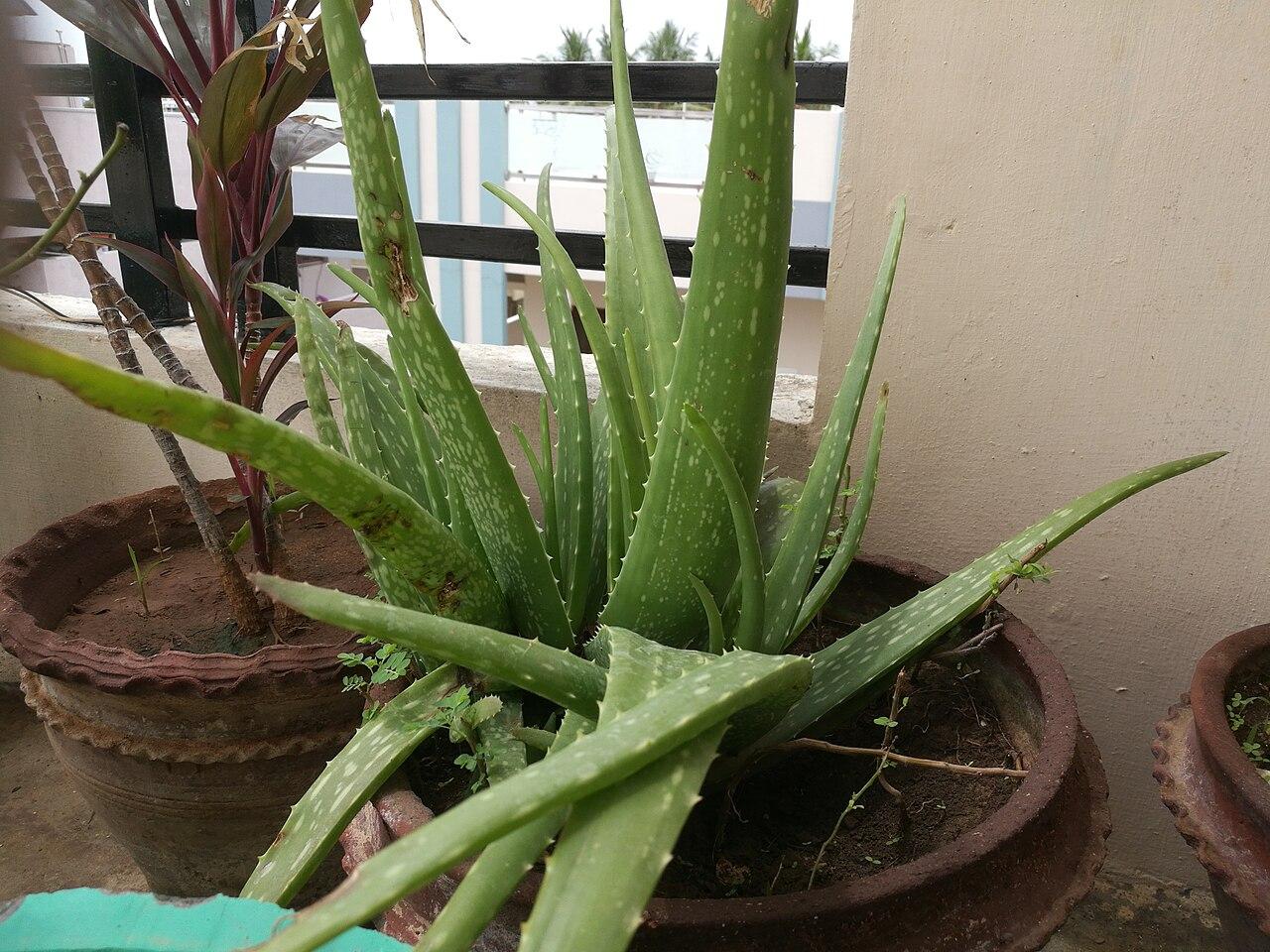
Aloe Vera: The Succulent Most People Drown
It survives neglect for years and dies in a fortnight of attention. Aloe vera is genuinely easy once you accept that almost everything it needs from you is something you do not do.
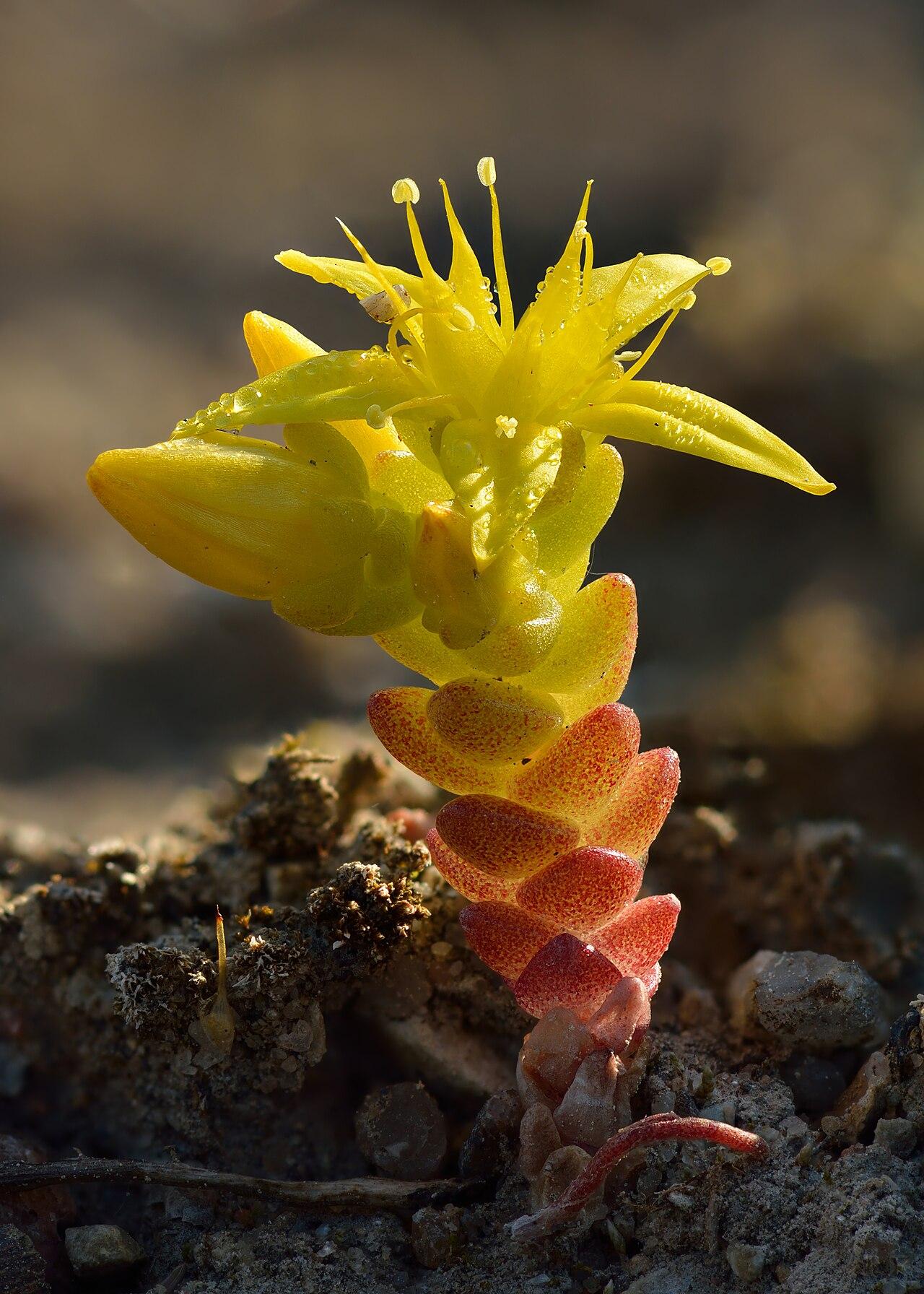
Soak and Dry: The Only Succulent Watering Method Worth Learning
Little and often feels careful and kills succulents. The method that works is counterintuitive: drench them completely, then do nothing at all for weeks.
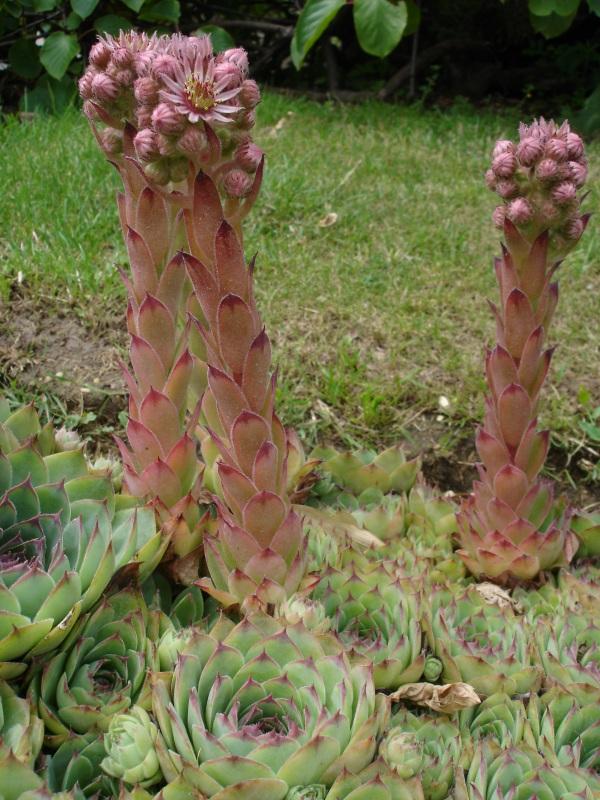
Why Your Succulent Is Stretching — and What You Can Still Do
The rosette opens up, the stem lengthens, the leaves point downward and get further apart. That is etiolation, it is always a light problem, and it does not reverse. But the plant is fixable.