Spider Mites vs Mealybugs: Identify It Before You Spray
These are the two pests you are most likely to meet indoors, and the treatments barely overlap. Getting the identification right saves weeks of the wrong approach.
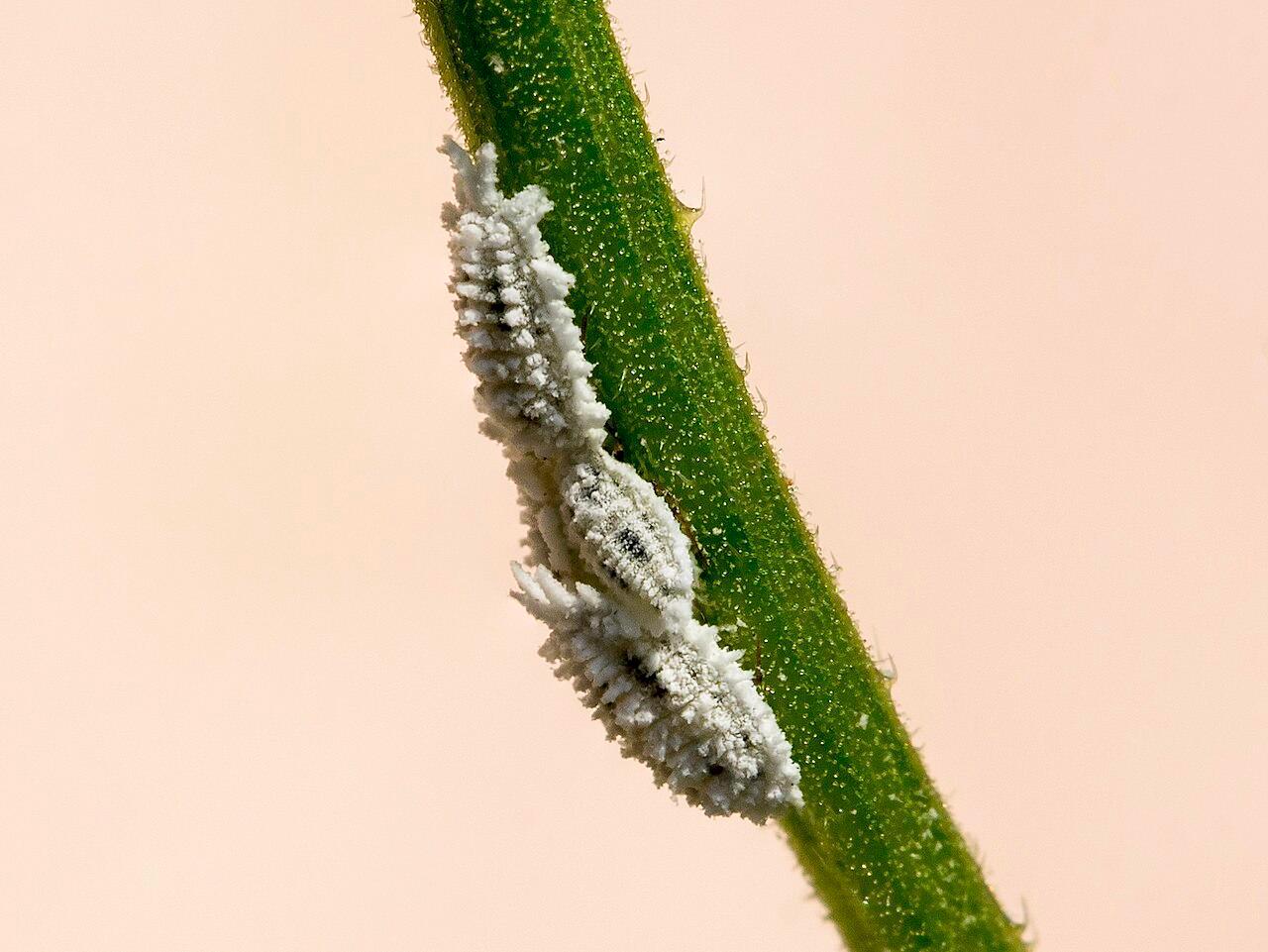
Photo: Mealybug by Crisco 1492 · CC BY-SA 4.0 · via Wikimedia Commons
01Telling them apart
Both are sap-sucking pests, both weaken plants slowly, and both are far easier to control when caught early. Beyond that they look and behave nothing alike.
Spider mites are arachnids, well under half a millimetre long, and you will usually see the damage before the animal. Turn a leaf over and look for fine pale speckling — a stippled, dusty look — and, in an established infestation, delicate webbing across leaf axils and shoot tips.
Mealybugs are soft-bodied insects a few millimetres long, coated in a white waxy powder. They cluster in the protected spots: leaf axils, the undersides of leaves along the midrib, where the stem meets the medium, and inside new unfurling growth. Their clumps look like small pieces of cotton wool.
| Spider mites | Mealybugs | |
|---|---|---|
| Visible form | Almost invisible dots; webbing | White cottony clusters, 2–4 mm |
| Where | Leaf undersides, shoot tips | Leaf axils, stem joints, roots |
| Leaf damage | Fine pale stippling, bronzing | Yellowing, distorted new growth |
| Sticky residue | No | Yes — honeydew, then black sooty mould |
| Thrives in | Hot, dry, still air | Warm, humid, overfed plants |
| Speed | Explosive — generations in a week | Slower but very persistent |
| Hardest part | Catching it early | Reaching every hiding place |
02Spider mites
The most reliable diagnostic is the paper test. Hold a sheet of white paper under a leaf and tap the leaf sharply. If tiny specks fall onto the paper and then start moving, you have mites.
They multiply extraordinarily fast in warm dry conditions — a generation can complete in under a week at 27°C — which is why an infestation seems to appear overnight. Central heating in winter and hot dry summer rooms are their ideal environment.
Damage begins as fine pale dots where individual cells have been drained. As it progresses, whole leaves take on a bronzed, dusty appearance and then dry and drop. Webbing across the growing tips means the population is already large.
- Isolate first — Move the plant well away from others immediately. Mites travel on air currents and on your hands.
- Wash the plant — A strong spray of water on the leaf undersides in a shower or sink physically removes most of the population. Repeat every three days for two weeks.
- Raise the humidity — Mites hate moist air. Grouping plants, using a pebble tray or running a humidifier meaningfully slows reproduction.
- Treat — Insecticidal soap or a horticultural oil, applied thoroughly to leaf undersides. Repeat every five to seven days for at least three cycles to catch newly hatched mites — eggs are unaffected by most treatments.
- Do not rely on generic bug sprays — Mites are arachnids, not insects, and many household insecticides do little to them. Some even kill their natural predators and make things worse.
03Mealybugs
Mealybugs are slower to spread but far harder to eliminate, because their waxy coating repels water-based sprays and they hide in places you cannot easily reach — including, in bad cases, on the roots below the medium.
The first sign is often not the insect but the honeydew: a sticky film on the leaves, or on the furniture underneath. Black sooty mould then grows on that sugar, which looks alarming but is a symptom rather than a separate disease.
Assume that any visible cluster represents a much larger hidden population. This is why treatment has to be repeated over four to six weeks rather than done once.
- Isolate and inspect — Check every plant that has been within touching distance, including undersides and the medium surface.
- Spot-treat with alcohol — A cotton bud dipped in 70% isopropyl alcohol dissolves the waxy coat and kills on contact. This is the most effective single technique — go over every axil and crevice.
- Follow with soap or oil — Insecticidal soap or neem oil across the whole plant, including the stem base and the medium surface.
- Repeat weekly — For at least four to six weeks. Eggs hatch in intervals, and stopping after two clear weeks is how infestations return.
- Check the roots — If the plant keeps re-infesting despite thorough treatment, unpot it. Root mealybugs look like white powder on the roots and require a full medium replacement and a rinse of the root ball.
04Prevention that actually works
Quarantine new plants for two to three weeks, away from your collection, and inspect them weekly. Almost every infestation arrives on a new purchase.
Inspect while you water. Turning over a few leaves takes seconds and catches problems while they are still a few insects rather than a colony.
Keep plants unstressed. Both pests do disproportionate damage to plants already weakened by poor light, erratic watering or overfeeding — excess nitrogen in particular produces soft new growth that mealybugs prefer.
Wipe leaves regularly. It removes early-stage pests, eggs and dust in one pass, and gives you a close look at the plant.
05When to give up on a plant
Sometimes the honest call is to discard it. If a plant has been treated thoroughly for six weeks and the population is still growing, if it is heavily infested and of no sentimental value, or if it sits at the centre of a collection you keep re-infecting, removal protects everything else.
Bag the plant before carrying it through the house, and dispose of the medium too rather than reusing it.
Wash the pot in hot soapy water, and clean the shelf or windowsill it stood on — mites in particular survive in cracks and behind trim for a surprising while.
Frequently asked questions
- Is neem oil safe indoors?
- Generally yes, though it has a strong smell that lingers. Mix fresh each time with a drop of mild soap as an emulsifier, apply out of direct sun, and never on a plant that is wilting or heat-stressed.
- Can I use predatory mites in my home?
- Yes, and Phytoseiulus persimilis is very effective against spider mites. It works best in a room with reasonable humidity and needs you to stop spraying entirely, since sprays kill the predators too.
- Why do the pests keep coming back?
- Usually because treatment stopped too early or missed a hiding place — leaf undersides, axils, the stem at medium level, or the roots. Continue for at least two weeks after the last visible pest.
Lan Nguyen
Balcony grower & founding editor
Lan has kept ornamental plants on a 12 m² apartment balcony for eight years, mostly tropical foliage and small-scale bonsai. She writes the care and comparison guides here, and has killed enough plants to be specific about how.
Keep reading
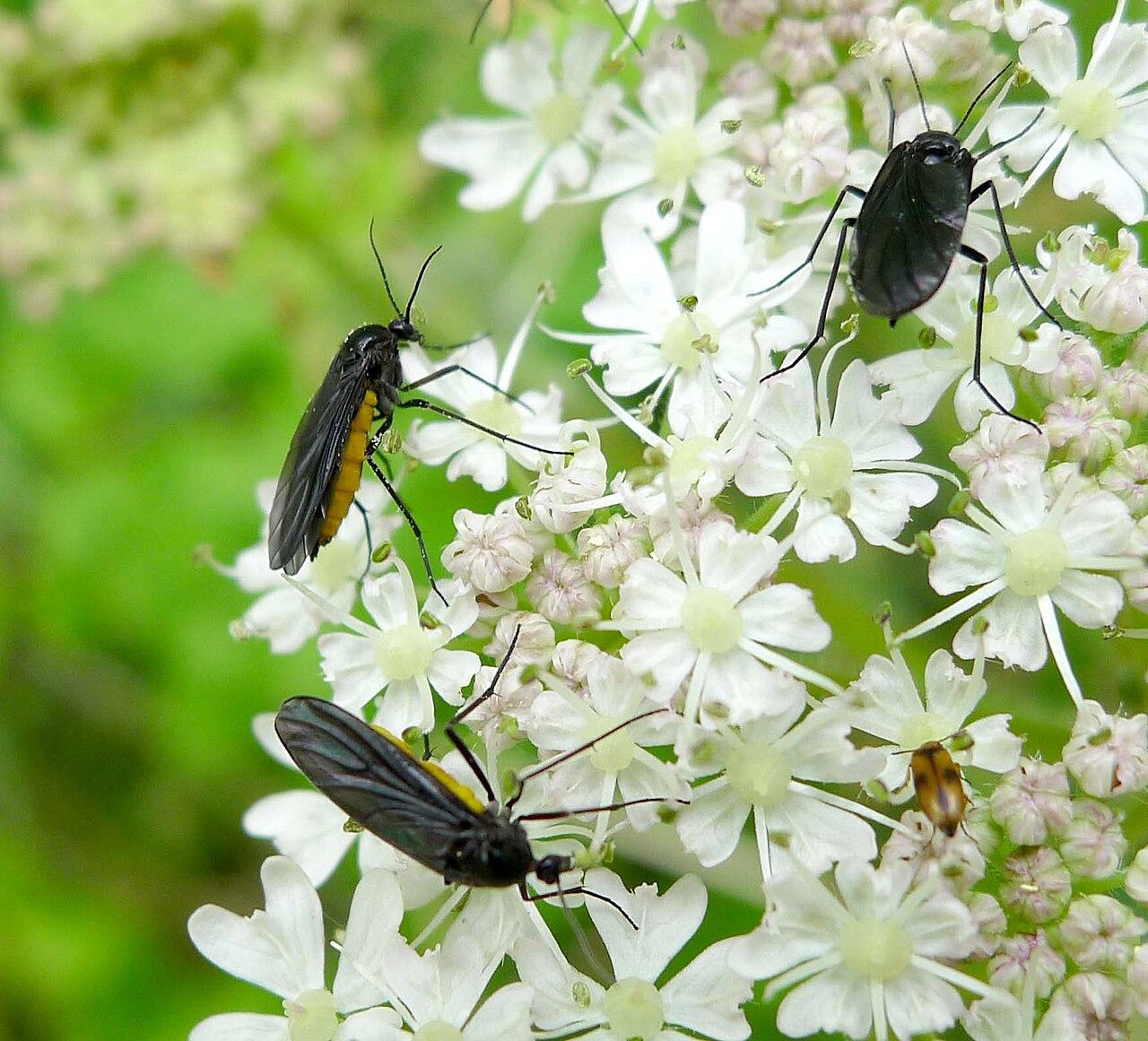
Fungus Gnats: Annoying, Mostly Harmless, Easy to Eliminate
The small black flies drifting out of your pots are not eating your plant. They are a symptom of medium that stays too wet — which is why the fix is a watering fix.
Root Rot: Catching It Early and Saving the Plant
By the time the leaves tell you, the roots have been failing for weeks. Here is what to look for earlier, and the surgery that saves a plant that still has firm tissue somewhere.

Stop Watering on a Schedule: A Seasonal Approach Instead
The most common question is 'how often should I water this?' — and the honest answer is that the interval changes by a factor of three between July and January. Here is how to read it instead of counting days.