Root Rot: Catching It Early and Saving the Plant
By the time the leaves tell you, the roots have been failing for weeks. Here is what to look for earlier, and the surgery that saves a plant that still has firm tissue somewhere.
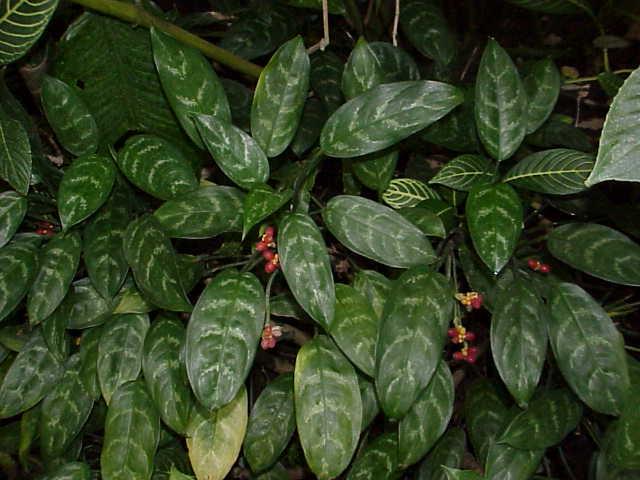
Photo: Aglaonema by Kurt Stüber [1] · CC BY-SA 3.0 · via Wikimedia Commons
01What root rot actually is
Root rot is not one disease. It is the collapse of the root system under waterlogged conditions, usually finished off by opportunistic fungi and water moulds — Pythium, Phytophthora, Fusarium — that are present in most media and only become destructive when oxygen runs out.
Roots respire. They need air in the gaps between particles, and when those gaps stay full of water, roots suffocate and begin to die. The dead tissue is then colonised by the organisms above, which spread into healthy tissue.
This is why the cause is almost always a combination rather than one mistake: a pot without drainage, a dense water-retentive medium, an oversized pot, a saucer left full, and watering on a schedule through a dark cool winter. Any two of those together will do it.
02Early signs, in order of appearance
The useful ones happen before the plant looks obviously ill.
- The medium stays wet — A pot that used to dry in a week now takes three. This is the earliest signal and it precedes any leaf symptom — dying roots stop drinking.
- A sour smell — Lift the pot and smell the drainage hole. Healthy medium smells earthy. Anaerobic medium smells sour, swampy or faintly of drains.
- Yellowing lower leaves — Several at once, soft rather than crisp, sometimes still green when they fall.
- Wilting despite wet medium — The definitive sign. Confirm by feeling the medium before you do anything else.
- A soft stem base — Press gently where the stem meets the medium. Any give, discolouration or mushiness means the rot has reached the crown, which is much more serious.
- Dark roots at the drainage hole — Healthy roots showing at the hole are pale and firm. Brown, thin, thread-like ones are already dead.
03The rescue procedure
Work on a surface you can clean, with clean scissors or a blade. Sterilise between cuts with alcohol if the rot is extensive.
- 1. Unpot — Tip the plant out supporting the base of the stem. Do not pull it out by the stem — rotted roots detach and you lose your reference for what is still attached.
- 2. Wash the roots — Rinse the medium away under lukewarm water so you can see the whole root system. Dead roots often wash off entirely, leaving the outer sheath behind like a thread.
- 3. Cut everything soft — Remove any root that is brown, black, slimy or falls apart when touched, cutting back to firm pale tissue. Be thorough — leaving rot behind means repeating this in a month.
- 4. Reduce the top growth — If you removed more than about a third of the roots, remove a comparable proportion of leaves. A reduced root system cannot support the whole canopy.
- 5. Repot small — Fresh medium, a clean pot with drainage, and no larger than the remaining root ball needs. This is one case where a smaller pot than before is correct.
- 6. Wait — Water lightly, or not at all for a few days if the medium is already damp. No fertiliser for a month. Bright indirect light, out of direct sun.
04Judging the odds
Some plants are worth the surgery and some are not, and it is better to decide before you spend a month hoping.
| What you find | Chance of recovery | Approach |
|---|---|---|
| Some brown roots, firm crown, most roots pale | Good | Trim, repot, reduce watering |
| Most roots gone, crown still firm | Moderate | Trim hard, cut back foliage, repot small |
| Crown soft, stem mushy at the base | Poor | Take healthy cuttings from the top instead |
| Whole plant limp, stem soft well above medium | Very poor | Salvage cuttings if any firm tissue remains |
05Making sure it does not happen again
Every pot needs a drainage hole. No exceptions, no gravel layer substitutes. If you love a sealed decorative pot, use it as a cachepot with the plant in a plastic liner, and empty it after watering.
Match the medium to the plant. Dense peat-based compost holds too much water for aroids, succulents and most tropical foliage. Adding 20–30% perlite or orchid bark to bagged compost fixes most cases.
Right-size the pot. One size up at a time, always. An oversized pot is a reservoir of medium the roots never reach and never dry.
Check before watering rather than watering on a schedule, and adjust hard for winter — most root rot is set up between October and February, when plants stop drinking but people keep watering.
Frequently asked questions
- Should I use a fungicide?
- Usually unnecessary. Removing the rotted tissue and fixing the conditions solves the problem; the fungi are opportunists, not the root cause. For a valuable plant, a cinnamon dusting or a horticultural fungicide on the cuts does no harm.
- Can hydrogen peroxide cure root rot?
- A dilute 3% solution adds a brief burst of oxygen and can help slightly right after surgery, but it does not reach rot inside tissue and it damages healthy root hairs too. It is not a substitute for cutting the dead material out.
- How long before I know it worked?
- Three to six weeks. Look for new growth, not for the old leaves recovering — damaged leaves will not repair. If nothing has changed after six weeks and the stem base is still firm, be patient; if the base has softened, take cuttings.
Lan Nguyen
Balcony grower & founding editor
Lan has kept ornamental plants on a 12 m² apartment balcony for eight years, mostly tropical foliage and small-scale bonsai. She writes the care and comparison guides here, and has killed enough plants to be specific about how.
Keep reading
Fungus Gnats: Annoying, Mostly Harmless, Easy to Eliminate
The small black flies drifting out of your pots are not eating your plant. They are a symptom of medium that stays too wet — which is why the fix is a watering fix.
Spider Mites vs Mealybugs: Identify It Before You Spray
These are the two pests you are most likely to meet indoors, and the treatments barely overlap. Getting the identification right saves weeks of the wrong approach.
Stop Watering on a Schedule: A Seasonal Approach Instead
The most common question is 'how often should I water this?' — and the honest answer is that the interval changes by a factor of three between July and January. Here is how to read it instead of counting days.