Can You Reuse Old Potting Mix? Usually, With Conditions
Spent compost is not waste, and it is not automatically safe either. The question is what happened to it in the pot — whether it collapsed, whether it was fed, and whether the plant that lived in it was healthy.
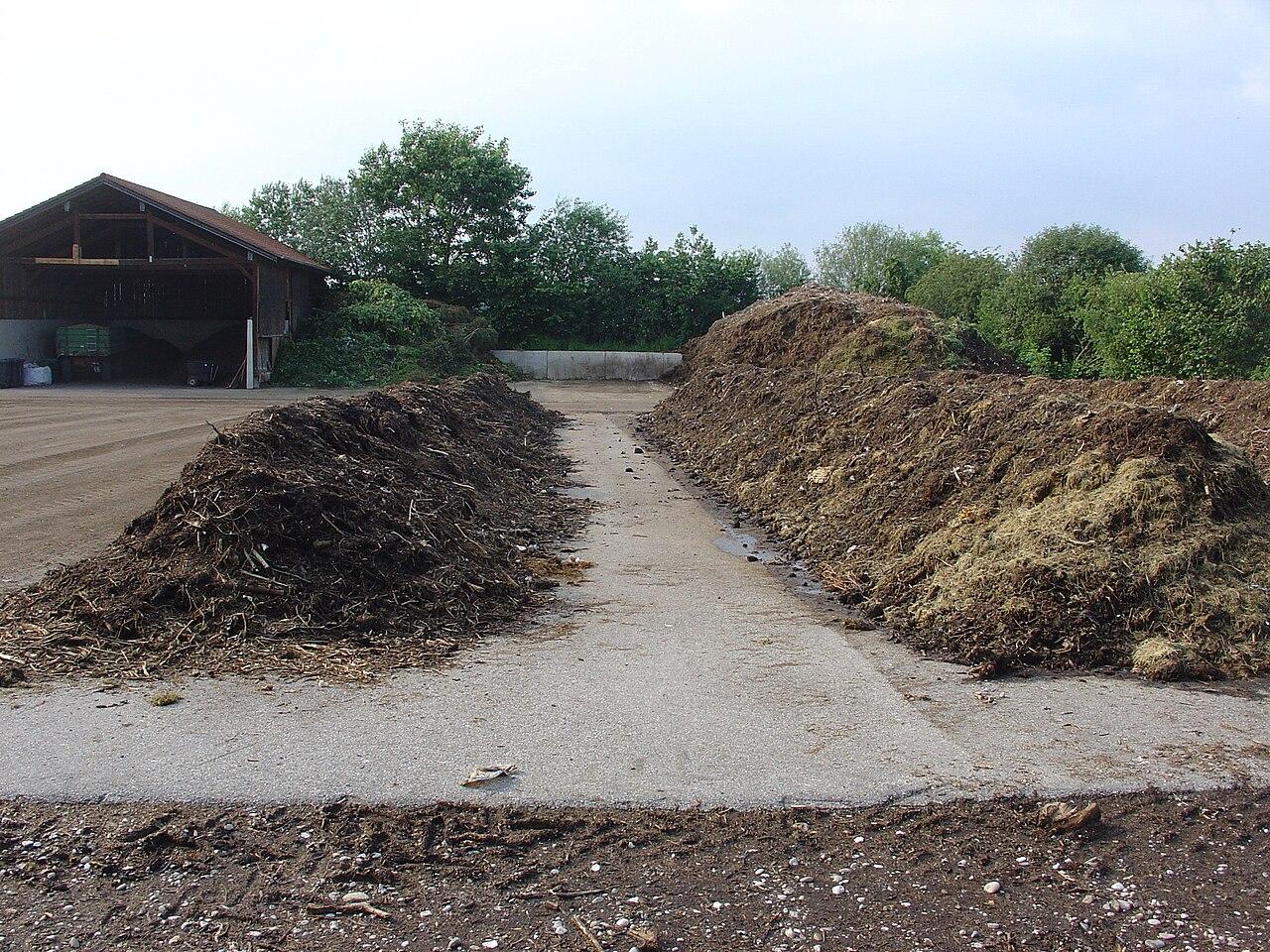
Photo: Compost by Crystalclear · CC BY-SA 3.0 · via Wikimedia Commons
01What actually goes wrong with used medium
A pot of compost after two years in service is not the same material that went in. Three separate things have happened to it, and only one of them is the nutrient depletion people usually think of.
The first and most important is structural collapse. Organic components — peat, coir, bark, wood fibre — decompose. As they do, particles get smaller, the gaps between them close, and the air-filled porosity of the medium falls. A mix that started at 20–25% air space might be down to half that. This is the change that matters, because roots need oxygen and no amount of feeding restores an airway.
The second is chemical. Nutrients have been taken up or leached out, while salts from fertiliser and hard water have accumulated. The pH has usually drifted, typically upward in hard-water areas. This is genuinely easy to correct.
The third is biological. The medium now contains a root fragment population, possibly fungus gnat larvae, possibly pathogen spores, and — if you were unlucky — the organism that killed the previous occupant. This is the part that requires judgement, since most of the time it is harmless and occasionally it is not.
02When to bin it
Most spent medium is reusable. A short list of situations makes it not worth the risk, and the cost of a fresh bag is low enough that erring toward caution is reasonable.
- The plant died of root rot — Pythium and Phytophthora persist in the medium and reinfect. Bin it, and disinfect the pot before reuse.
- There was a soil-borne disease or a nematode problem — Same reasoning. Do not compost it either if you use that compost on the same kind of plants.
- It smells sour or sulphurous — Anaerobic decomposition. The structure has gone and the chemistry is hostile to roots.
- It has become a solid dense block — If the root ball holds its shape with no crumbling and water sits on top, the structure is finished. Compost it.
- It is heavily crusted with white salt deposits — Salvageable by leaching, but usually not worth the effort for a small quantity.
- It had a persistent root mealybug or fungus gnat infestation — Both survive in the medium. Bin it, or heat-treat it thoroughly before reuse.
03Refreshing medium for reuse
For medium from a healthy plant that has simply been in service for a couple of years, refreshing is straightforward and takes about ten minutes.
Start by tipping it out and picking through it. Remove old roots — which decompose and consume nitrogen while they do — plus stones, any remaining slow-release prills, and anything that looks like an insect. Break up compacted lumps with your hands.
Then restore the structure, which is the essential step. Mix in fresh aerating material at around a quarter to a third of the volume: perlite, pumice, or fresh bark. This is not optional, and it is what most people skip. Simply adding fertiliser to collapsed medium produces a well-fed plant suffocating in an airless pot.
Add fresh organic base as well, at roughly a third to a half. In practice a good working ratio is about half old medium, a quarter fresh compost or coir, and a quarter fresh aerator. That dilutes accumulated salts, restores water-holding capacity and reintroduces some structure.
Finally, add slow nutrition — a handful of worm castings, or a slow-release fertiliser at the label rate. And moisten the mix before potting into it.
| Component | After use | Action |
|---|---|---|
| Perlite, pumice, grit, lava | Unchanged — permanent | Rinse and reuse indefinitely |
| LECA | Unchanged | Wash, soak, reuse; sterilise between plants if disease was present |
| Orchid bark | Partly decomposed, softened | Reuse only if still firm; otherwise compost |
| Coir and peat | Compacted, partly broken down | Reuse at half, with fresh aerator added |
| Sphagnum moss | Broken down and dense | Compost it — it is cheap and its structure is the point |
| Old roots | Decomposing, tying up nitrogen | Remove and compost |
04Sterilising, and whether you need to
Most reused medium does not need sterilising. If the previous plant was healthy and you are potting a robust plant into it, refreshing is sufficient, and heat treatment has a real cost: it kills the beneficial microbial community along with everything else, leaving a biological vacuum that opportunistic organisms colonise first.
There are three situations where it is worth doing: sowing seed, where damping-off fungi are a genuine risk; rooting cuttings, which are vulnerable while they have no roots; and reusing medium after a fungus gnat or root mealybug problem.
Solarising is the easiest method for small quantities: seal moistened medium in a clear bag and leave it in strong sun for several weeks. It kills most pests and pathogens without a kitchen full of smell.
Oven treatment is faster: moisten the medium, cover it in a tray, and heat to around 80°C internal temperature for thirty minutes. Do not go hotter — above roughly 100°C organic matter starts producing compounds that are toxic to plants, so this is pasteurisation rather than true sterilisation. The smell is memorable, which is why solarising is popular.
Microwaving works for very small amounts: moistened medium in a vented container for a couple of minutes. Watch for any metal or foil fragments, which are not unusual in bagged compost.
Chemical sterilisation with bleach is for pots and tools, not for medium. Rinse pots thoroughly after using it.
05The practical routine
The habit worth adopting is to keep a bucket or tub for spent medium rather than deciding what to do with each potful in the moment. Empty each healthy plant's old medium into it as you repot, pick out roots as you go, and top it up with fresh aerator and compost when it gets low.
Keep a second, separate route for anything suspect — a bag for the compost heap or the bin — so that a rotted root ball never goes into the reuse bucket by mistake. That one habit removes most of the risk from the whole practice.
Match the reused medium to the plant. Refreshed old medium is perfectly good for tough, vigorous plants — pothos, spider plants, tradescantia, sansevieria, most outdoor container plants — and is not the right choice for a plant you have just spent money on, for seedlings, or for anything fussy about drainage.
And keep the mineral fraction indefinitely. Perlite, pumice, grit and LECA never wear out. Sieving them out of spent medium, rinsing them, and returning them to the mix is the closest thing to free potting material there is.
Frequently asked questions
- Can I just top up the pot with fresh compost instead of repotting?
- Top-dressing — replacing the top few centimetres — is a good annual maintenance step for large plants that are impractical to repot. It does not address the compaction lower down, so it delays rather than replaces a proper repot.
- Does old compost lose all its nutrients?
- Most soluble nutrients are gone within a few months of active growth, which is why a plant unfed after that point slows down. Nutrients are the easy part to restore; structure is not.
- Is it safe to reuse medium between different plants?
- Between healthy plants, yes. Houseplant pathogens are not usually host-specific in a way that makes this risky. Between a diseased plant and a healthy one, no.
- What about the medium from a plant I just bought?
- Nursery mixes are often a dense peat blend chosen for shipping, not for your home. When you repot, keep the plant and be sceptical about reusing that particular medium — it is frequently already the wrong material.
Marcus Hale
Contributor — soil & propagation
Marcus spent six years in a wholesale nursery mixing media by the cubic metre before moving to container growing at home. He covers potting mixes, repotting and the unglamorous half of plant care.
Keep reading
Pot Size and Shape: Why One Size Up Is a Real Rule
The advice to go up one pot size sounds like fussiness. It is physics: a pot holds a saturated layer at its base regardless of what you fill it with, and a pot too large for its plant keeps that layer wet for weeks.
Bark, Pumice, Grit and the Rest: A Guide to What Goes in a Mix
Every potting recipe is a base plus amendments. Knowing what each amendment actually does — and which ones do nothing — lets you build a mix for a plant nobody has written a recipe for.
Four Potting Mixes That Cover Almost Every Houseplant
Bagged compost is designed for garden beds and outdoor containers, not for a pot indoors. Four ingredients and four ratios will serve everything on your shelf better.