Four Potting Mixes That Cover Almost Every Houseplant
Bagged compost is designed for garden beds and outdoor containers, not for a pot indoors. Four ingredients and four ratios will serve everything on your shelf better.
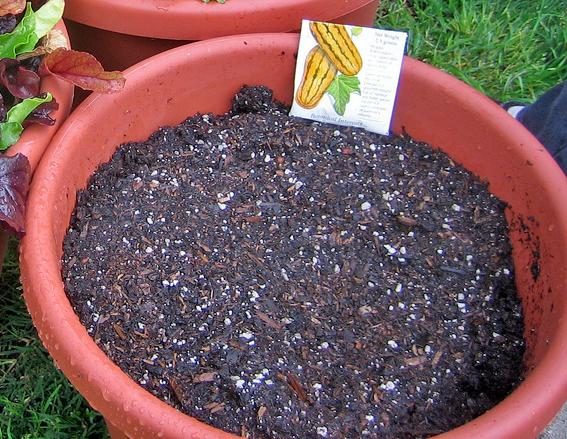
Photo: Potting soil by Chris Radcliff from San Diego, CA, USA. Color-corrected and cropped by Daniel Case 2008-07-10 · CC BY-SA 2.0 · via Wikimedia Commons
01Why bagged compost alone is not enough
Commercial potting compost is formulated to be cheap, consistent and moisture-retentive — sensible for outdoor containers that dry fast in wind and sun, and wrong for a pot standing in a still, dim living room.
Indoors there is no wind, far less light, and much lower evaporation. The same medium that dries in three days on a patio takes three weeks on a bookshelf, and the roots sit in saturated conditions for most of that.
The fix is structure. A good indoor medium holds enough water to keep the plant supplied while retaining air pockets that persist after watering. That means larger particles, and it is mostly what separates a mix that works from one that rots plants.
02The four ingredients
Almost every houseplant mix is a ratio of these. Buy them once and you can make anything.
- Base — coco coir or peat-based compost — Holds moisture and gives the mix body. Coir is the more sustainable choice and rewets easily when dry; peat holds slightly more water but repels it once fully dried out.
- Aerator — perlite or pumice — Creates the air pockets. Perlite is light and cheap but floats to the surface over time; pumice is heavier, stays mixed, and is better for top-heavy plants.
- Coarse organic — orchid bark — Large, slow-decomposing chunks that keep the structure open for years. Essential for aroids, which in the wild root against bark rather than in soil.
- Nutrients — worm castings or compost — A modest organic nutrient source. Around 10% is plenty; more makes the mix dense and holds too much water.
03The four recipes
Measure by volume, using any container as your unit. A yoghurt pot works as well as a scoop.
- All-purpose foliage — For dracaena, ficus, spider plants, peace lilies, most bought houseplants. This is the default when you are unsure.
- Chunky aroid — For monstera, philodendron, pothos, anthurium, syngonium. These are climbers that root against bark; they want a mix you can almost see through.
- Succulent and cactus — For echeveria, sedum, haworthia, most cacti, jade. Add coarse sand or grit for extra weight in shallow pots. Keep the organic content low.
- Moisture-loving — For ferns, calathea, maranta, fittonia. Still needs aeration, just less of it — this is the one mix where retention matters more than drainage.
| Mix | Base | Perlite/pumice | Bark | Castings |
|---|---|---|---|---|
| All-purpose foliage | 5 | 3 | 1 | 1 |
| Chunky aroid | 3 | 3 | 3 | 1 |
| Succulent & cactus | 3 | 6 | 0 | 1 (optional) |
| Moisture-loving | 7 | 2 | 0 | 1 |
04The shortcut for people who do not want to mix
If you buy one bag of bagged compost and one bag of perlite, and add 30% perlite by volume to everything, you will have solved most of the problem.
For aroids specifically, add orchid bark as well — roughly equal parts compost, perlite and bark. This single change eliminates more root rot in monstera and philodendron than any watering adjustment.
Pre-made specialist mixes are perfectly good; they simply cost three to five times as much per litre as making your own, and once you have the ingredients, mixing takes two minutes.
05Mixing and storing
Mix dry in a bucket or tub, then add water gradually until the medium holds together when squeezed but no water runs out. Bone-dry coir and peat repel water when first potted, which leaves a newly potted plant unexpectedly dry.
Wear a dust mask when handling dry perlite. The dust is a respiratory irritant, and damping the bag before scooping avoids the problem entirely.
Store leftovers sealed and dry — an open bag in a damp corner grows fungus gnats and moulds, which you then introduce to every plant you repot.
Do not sterilise. Baking medium in an oven kills the beneficial microbial life along with anything harmful, smells appalling, and is unnecessary for clean bought ingredients.
06Adjusting when things go wrong
If pots stay wet too long, add more perlite or bark and move to a smaller or terracotta pot. If they dry out unmanageably fast, increase the base fraction or switch to plastic.
If the surface grows green algae, the medium is staying too wet at the top — usually a watering habit rather than a mix problem, though a grit top layer helps.
If the medium has shrunk away from the pot sides and water runs straight down the gap, it has dried past the point where it rewets. Bottom-water for half an hour to rehydrate it fully, and if it is peat-based and repeats, consider switching to coir.
Refresh every couple of years regardless. Organic components break down, structure collapses, and a mix that was open when you made it becomes dense. Repotting into fresh medium is the fix.
Frequently asked questions
- Is coir better than peat?
- Environmentally, clearly — peat extraction destroys carbon-storing bog habitat. Horticulturally they are close, though coir holds fewer nutrients of its own and rewets far better after drying out.
- Can I use sand instead of perlite?
- Only coarse horticultural sand, and only for succulents. Fine builder's sand fills the gaps between particles and makes a mix denser rather than more open — the opposite of what you want.
- Do I need to add fertiliser to a homemade mix?
- Not at first if you included worm castings or compost. Start liquid feeding after about two months, since a homemade mix carries less built-in nutrition than commercial compost.
Marcus Hale
Contributor — soil & propagation
Marcus spent six years in a wholesale nursery mixing media by the cubic metre before moving to container growing at home. He covers potting mixes, repotting and the unglamorous half of plant care.
Keep reading
Perlite vs Vermiculite: They Do Opposite Things
Both are white-ish mineral granules sold on the same shelf for the same price, and people treat them as interchangeable. One adds drainage; the other adds water retention.
The Gravel Layer Myth: Why It Makes Drainage Worse
Putting stones in the bottom of a pot is the most widely repeated piece of plant advice there is. It has been known to be counterproductive since the 1950s, and the physics is not complicated.
Fungus Gnats: Annoying, Mostly Harmless, Easy to Eliminate
The small black flies drifting out of your pots are not eating your plant. They are a symptom of medium that stays too wet — which is why the fix is a watering fix.