Neem, Soap and Horticultural Oil: What Each One Actually Does
Three low-toxicity products, sold interchangeably, working by completely different mechanisms. Knowing which does what is the difference between a treatment that works and a month of spraying the wrong thing.
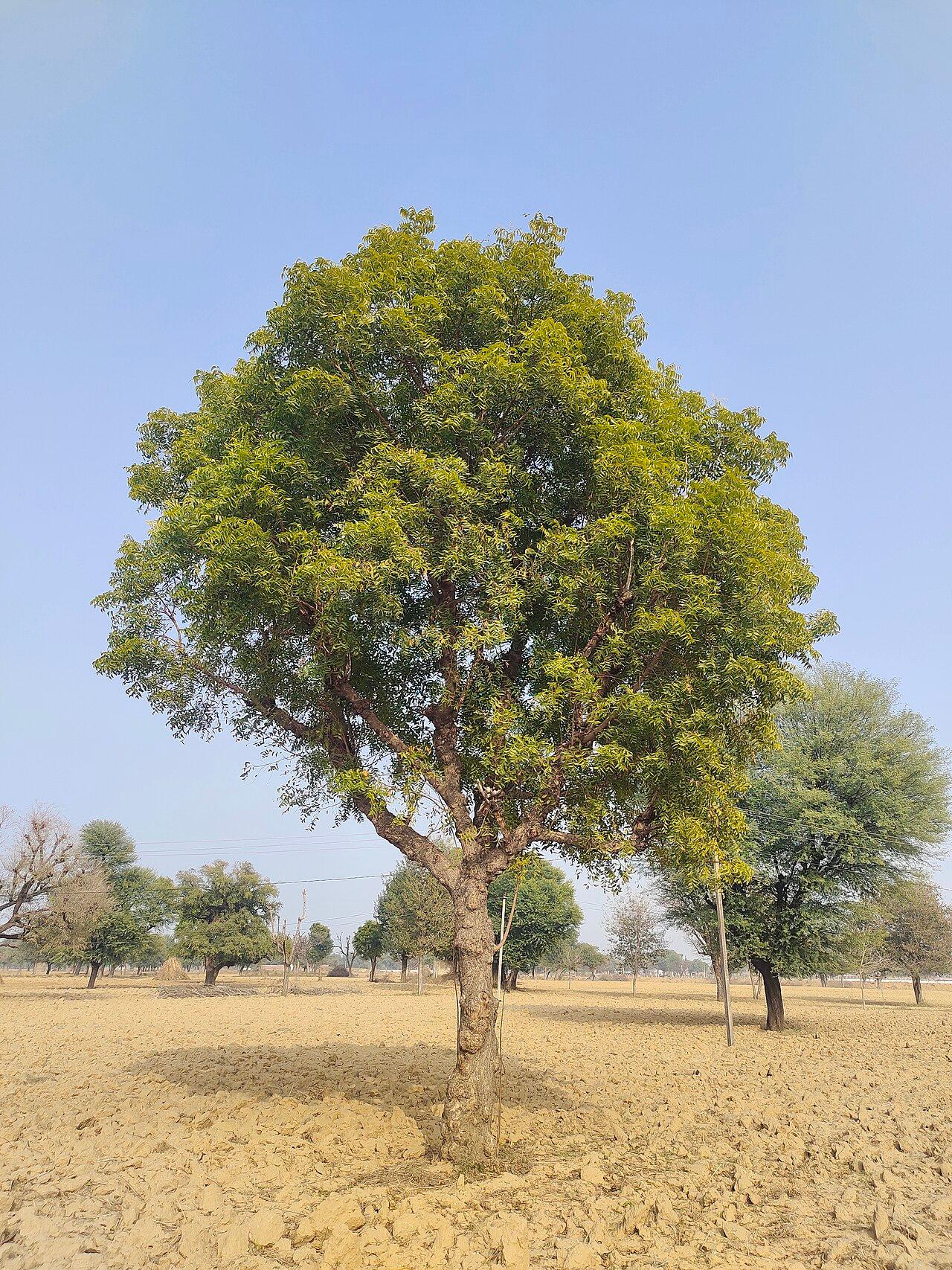
Photo: Azadirachta indica by TheSlumPanda · CC BY-SA 4.0 · via Wikimedia Commons
01Three products, three mechanisms
These sit side by side on the same shelf, are recommended interchangeably online, and work in genuinely different ways. Choosing badly is why people conclude that low-toxicity treatments do not work.
Insecticidal soap is a potassium salt of fatty acids. It works purely physically: it dissolves the waxy cuticle of soft-bodied insects, and they die of desiccation. It kills what it wets, at the moment it wets it, and it has no residual effect whatsoever — once the spray dries, it is inert.
Horticultural oil, whether a refined mineral oil or a plant oil, works by smothering. It forms a film that blocks the spiracles insects breathe through, and it also coats and suffocates eggs, which soap does not. Like soap it is a contact treatment with essentially no residue.
Neem oil is the odd one out. The pressed oil itself smothers like any oil, but its active constituent, azadirachtin, is absorbed into the plant tissue and behaves as an insect growth regulator and antifeedant. Insects that feed on treated tissue stop feeding, fail to moult properly, and die over several days. It is slower, it is not a knockdown, and its effect persists for days after application.
| Insecticidal soap | Horticultural oil | Neem (azadirachtin) | |
|---|---|---|---|
| Mechanism | Dissolves the cuticle | Smothers; blocks breathing pores | Absorbed; disrupts feeding and moulting |
| Speed | Immediate | Immediate | Days |
| Kills eggs | No | Yes | Partially |
| Residual effect | None | None | Several days |
| Best against | Aphids, whitefly, mealybug, mites | Scale, mites, mealybug, eggs | Thrips, whitefly, mites, ongoing suppression |
| Weak against | Anything armoured; eggs | Nothing hidden in the medium | Fast knockdown of a heavy infestation |
| Main risk | Leaf damage on sensitive species | Leaf damage in heat or sun | Leaf damage; strong smell |
02Coverage is the whole thing
For soap and oil, the spray has to physically reach the insect. That sounds obvious and is nevertheless the reason most treatments fail, because people spray the tops of the leaves — where almost nothing lives.
Spray until every surface is visibly wet and about to run: both sides of every leaf, the stems, every leaf axil, the growing tip, the underside of the pot rim, and the surface of the medium. Turn the plant, get underneath it, and take the time to do it properly. A thorough treatment of a medium-sized plant takes several minutes.
Mealybugs in leaf axils, scale in bark crevices and mites in dense growing tips are all in places a casual spray does not reach, which is why those three come back after apparently successful treatments.
Repeat at five to seven day intervals, at least three or four times. With contact treatments this is not about resistance — it is because you will always miss individuals and eggs, and the interval is set to catch each new hatch before it can reproduce.
03Mixing and applying without damaging the plant
Oil and water do not mix, so neem needs an emulsifier — a few drops of mild liquid soap per litre — and vigorous shaking, repeated during application because it separates within minutes. Neem that has separated delivers a slug of neat oil onto a leaf, which is a common cause of burn.
Mix fresh each time. Azadirachtin degrades quickly in water and in light, and a bottle mixed last month is oily water with little activity left in it. Use warm water, which helps neem emulsify — cold water makes it clump.
Follow the label rate. Doubling the concentration does not double the effect; it roughly doubles the risk of leaf damage. A typical rate for neem is around 5 ml per litre with 1–2 ml of soap, but products vary considerably and the label wins.
Apply in the evening or on an overcast day, and never in direct sun. Oil films plus strong sun cause burn, and both oil and soap should be allowed to work overnight and dry slowly. Do not spray when the room is above about 30°C or below about 4°C.
Water the plant thoroughly the day before. A drought-stressed plant has closed stomata and reduced turgor and is far more prone to phytotoxic damage than a well-hydrated one.
- Always test first — Treat two or three leaves, wait 48 hours, and look for spotting or browning before doing the whole plant. This is not excessive caution — it is standard practice.
- Species that react badly — Ferns, palms, succulents and cacti, African violets and other fuzzy-leaved plants, and anything with a heavy natural bloom such as echeverias, where oil strips the farina permanently.
- Do not combine — Never apply oil within two weeks of a sulphur-based product, and do not stack oil on soap on the same day. One treatment at a time.
- Rinse afterwards on sensitive plants — For anything you are unsure about, rinsing the foliage with plain water the following morning limits exposure while preserving most of the effect.
04What none of them do
These products have a defined scope, and a lot of frustration comes from expecting them to work outside it.
None of them reaches insects inside the potting medium. Fungus gnat larvae, thrips pupae and root mealybugs are untouched by a foliar spray, and those require a soil drench, a biological control such as nematodes, or a change of medium.
None penetrates a mature armoured scale cover. Oil helps against crawlers and can smother some soft scale, but an established armoured scale infestation needs manual removal first.
Neem is not a fertiliser, a leaf shine or a preventative to be applied monthly to healthy plants. Routine spraying of plants with no pests coats the leaves, can clog stomata, and does nothing useful.
And none of them is harmless simply because it is low-toxicity. Neem is toxic to fish and harmful to bees on contact; soap and oil kill beneficial insects as readily as pests. Indoors this matters mainly if you are also using biological controls — spraying oil over a batch of predatory mites you have just released wastes both.
05A decision guide
Given a specific pest, the sensible first choice is usually clear.
| Pest | First choice | Then |
|---|---|---|
| Aphids | Rinse, then insecticidal soap | Repeat weekly ×3; remove infested tips |
| Whitefly | Soap or oil on leaf undersides | Yellow sticky traps; repeat ×4 |
| Spider mites | Rinse thoroughly, then oil | Raise humidity; repeat every 5 days ×4 |
| Mealybugs | Alcohol on a cotton bud, then oil | Check the roots too; repeat weekly ×4 |
| Soft scale | Scrape off, then horticultural oil | Systemic if severe; repeat ×4 |
| Armoured scale | Manual removal, then oil | Systemics do not work on these |
| Thrips | Neem or spinosad, alternating | Plus a soil drench for the pupae |
| Fungus gnats | None of the three | Dry the surface; BTI or nematodes |
Frequently asked questions
- Why does my plant have brown patches after spraying neem?
- Almost always concentration, sun, or a poorly emulsified mix. Mix fresh with warm water and a proper emulsifier, spray in the evening, and stay at or below the label rate.
- Can I use neem as a preventative every month?
- It is not worth it. Coating healthy leaves regularly risks damage for no benefit, and inspection is a better use of the same ten minutes.
- Is cold-pressed neem better than clarified hydrophobic neem?
- Cold-pressed retains azadirachtin and gives the growth-regulating effect. Clarified hydrophobic neem extract has most of it removed and works essentially as a smothering oil. For thrips and whitefly, use cold-pressed.
- Does soap harm the soil?
- In the small quantities involved in a foliar spray, no. It is not a soil drench, though — do not pour insecticidal soap into the pot as a treatment for anything.
Lan Nguyen
Balcony grower & founding editor
Lan has kept ornamental plants on a 12 m² apartment balcony for eight years, mostly tropical foliage and small-scale bonsai. She writes the care and comparison guides here, and has killed enough plants to be specific about how.
Keep reading
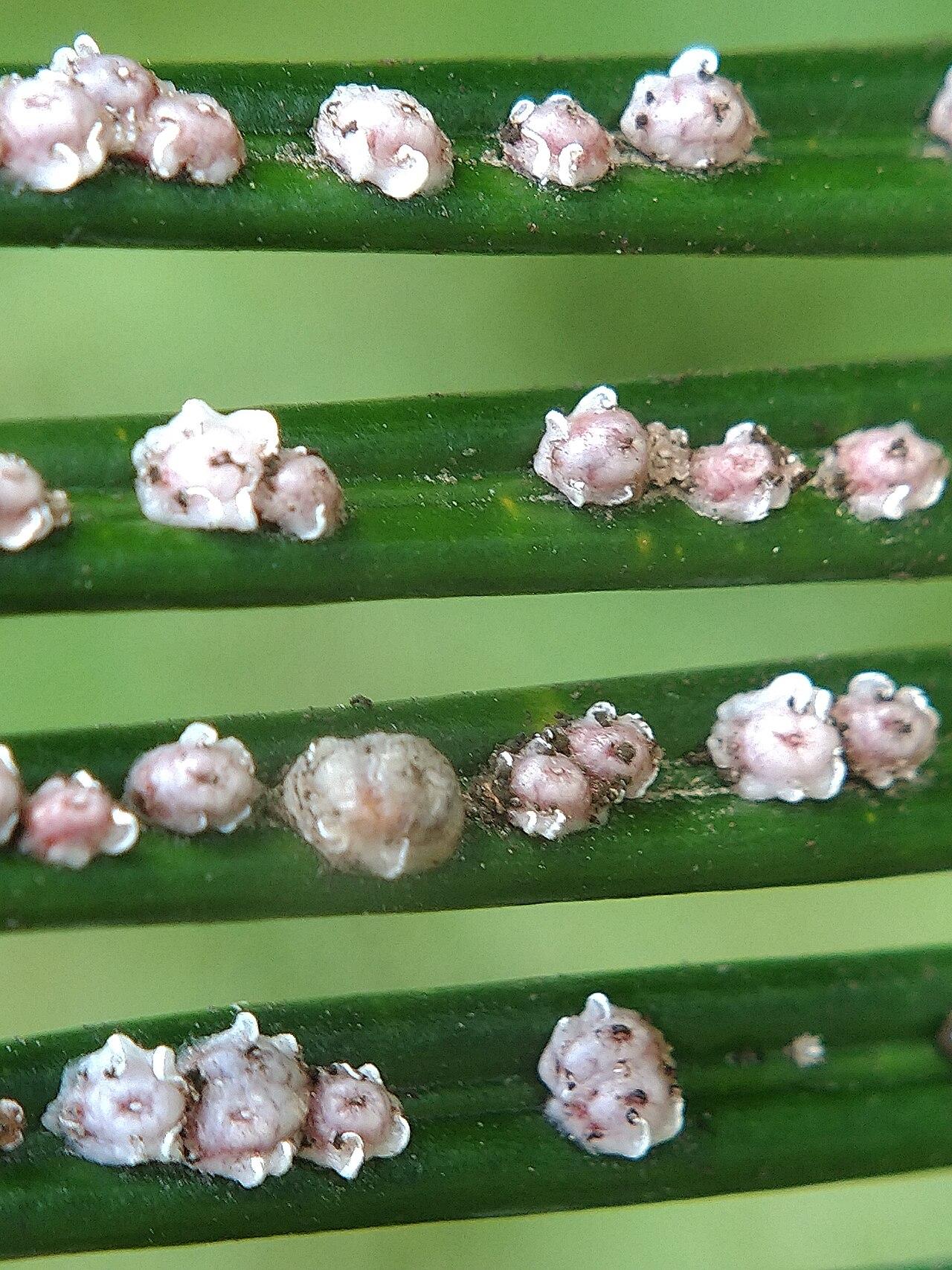
Scale and Thrips: The Two Pests That Get Found Too Late
Mites and mealybugs are visible and vulnerable. These two are neither — scale sits under a waterproof cover and thrips spend half their life inside the leaf and in the pot. Both need a different approach from a bottle of soap.
When It Isn't a Pest: Sunburn, Oedema, Chill and Salt Damage
A large share of the damage people spray for was never caused by anything living. These marks have a cause, a diagnosis and a fix — and none of them involve a bottle.
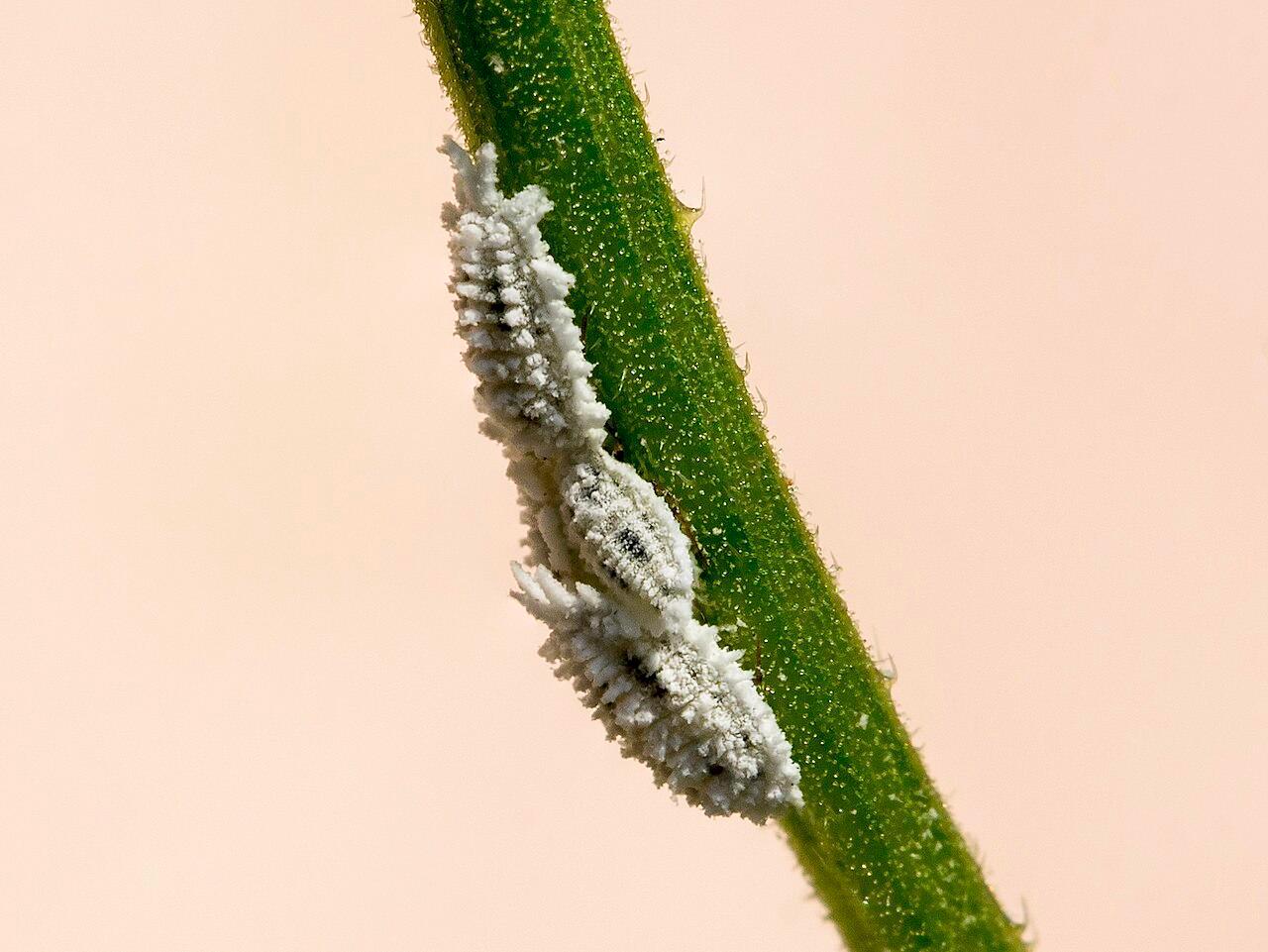
Spider Mites vs Mealybugs: Identify It Before You Spray
These are the two pests you are most likely to meet indoors, and the treatments barely overlap. Getting the identification right saves weeks of the wrong approach.