Coco Coir vs Peat: What Should Actually Fill Your Pots
Peat is being phased out and coir is the replacement everyone reaches for. They behave differently in ways that matter — in how they wet, how they hold nutrients, and in one chemical quirk that catches people out.
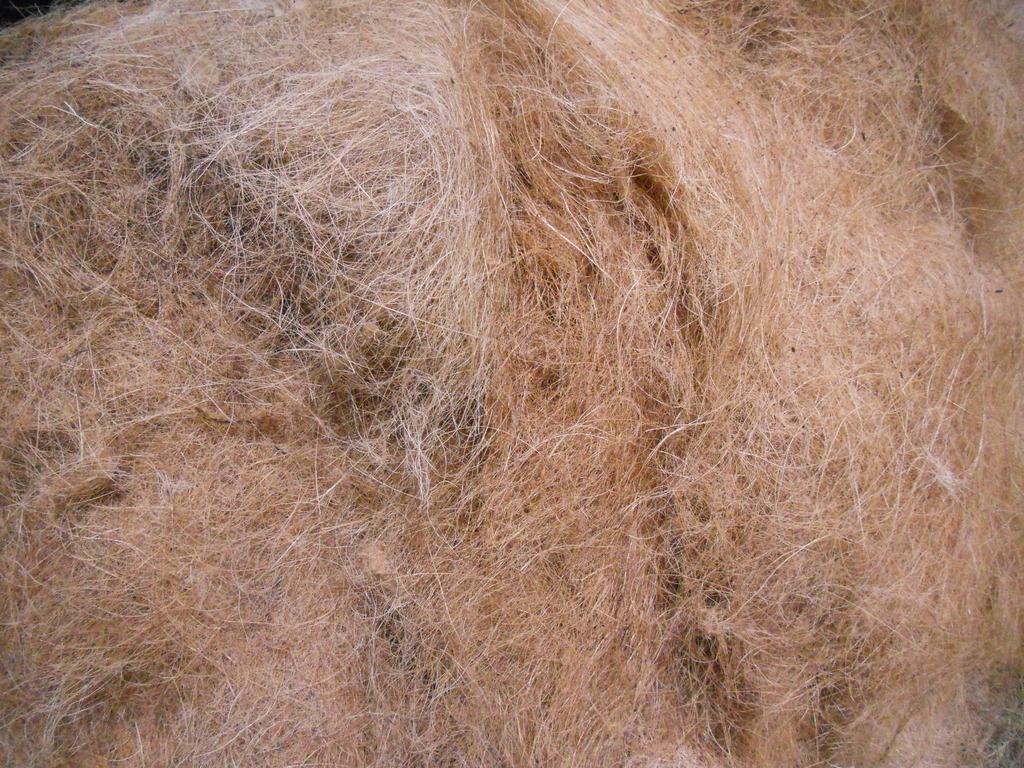
Photo: Coir by Fotokannan · CC BY-SA 3.0 · via Wikimedia Commons
01What each one actually is
Peat is partly decomposed sphagnum moss and other bog plants, laid down over thousands of years in waterlogged, acidic, oxygen-poor conditions that prevent it breaking down. Horticultural peat is dug from those bogs. It is fine-textured, acidic at around pH 3.5–4.5, holds a great deal of water for its weight, and is nearly sterile and chemically inert.
Coir is the fibrous husk of the coconut, a by-product of the coconut industry. What is sold as potting medium is usually coco peat or coir pith — the fine dust-like fraction — sometimes blended with chips and fibre. It is near-neutral at around pH 5.5–6.8, holds water and air well, and is far more resistant to compaction.
For most of the last fifty years peat was the default because it is cheap, consistent and predictable. That is changing for environmental rather than horticultural reasons, and coir is the substitute that has become dominant in peat-free composts alongside bark, wood fibre and green compost.
The two behave similarly enough to substitute, and differently enough that a straight swap in a familiar recipe will change your watering and feeding. That is what this article is about.
02How they behave in a pot
The most noticeable practical difference is rewetting. Peat that has dried out becomes hydrophobic: water beads on the surface, runs down the gap between the root ball and the pot wall, and comes out of the drainage hole while the middle of the pot stays bone dry. Anyone who has watered a shop-bought plant thoroughly and found it wilting the next day has met this.
Coir rewets readily. A dried coir-based mix absorbs water more or less immediately, which makes it considerably more forgiving of a missed watering and much easier to manage in a hanging pot or anywhere you cannot see the medium.
Structure is the second difference. Peat is fine and compacts steadily as it breaks down, losing air-filled porosity over a year or two. Coir holds its structure longer and drains a little faster at the same particle size, which is why it feels less prone to waterlogging even though its water-holding capacity is comparable.
Longevity favours coir slightly. Both break down, but coir's higher lignin content makes it slower to collapse in a pot, which extends the useful interval between repottings.
| Peat | Coco coir | |
|---|---|---|
| pH | 3.5–4.5, acidic | 5.5–6.8, near neutral |
| Rewetting when dry | Poor — becomes hydrophobic | Good — absorbs readily |
| Compaction over time | Compacts noticeably | Holds structure longer |
| Nutrient content | Essentially none | High potassium and sodium unless buffered |
| Interacts with Ca and Mg | Little | Yes — binds them unless pre-buffered |
| Needs lime added | Yes, to raise pH | No |
| Water-holding | Very high | High |
| Consistency between batches | Very consistent | Variable — quality depends on processing |
03The chemistry that catches people out
Coir has one genuine complication and it is worth understanding rather than memorising, because it explains a class of mysterious deficiencies.
Coir has a moderate cation exchange capacity, meaning it holds positively charged nutrient ions on its surfaces and exchanges them with the root zone. Coconuts grow in coastal soils, so untreated coir arrives loaded with potassium and sodium sitting on those exchange sites.
Calcium and magnesium carry a double positive charge and are held roughly twice as strongly as single-charged potassium and sodium. So when you feed a plant in unbuffered coir, the medium swaps: it releases its potassium and sodium into the root zone and locks the calcium and magnesium you just supplied onto its exchange sites.
The result is a plant showing calcium and magnesium deficiency — interveinal yellowing on older leaves, pale distorted new growth — in a pot you have been feeding conscientiously. On top of that, the elevated potassium being released actively antagonises magnesium uptake, so the deficiency is worse than the arithmetic alone suggests.
The fix is buffering, and reputable suppliers do it before sale: the coir is soaked in a calcium and magnesium solution until the exchange sites are saturated with them and the surplus potassium and sodium are rinsed away. Buffered coir behaves predictably from the first watering.
04The environmental question, honestly
The case against peat is strong and specific. Peat bogs are among the most effective carbon stores on land, holding more carbon than the world's forests despite covering a fraction of the area. Extraction drains the bog, exposes the peat to oxygen, and releases that carbon. The habitat itself — with its specialised plant and invertebrate communities — took millennia to form and is not meaningfully restorable on any human timescale.
The case for coir is weaker than it is usually presented. It is a genuine by-product, which is a real advantage, but the fine pith fraction is not automatically waste, processing requires large volumes of fresh water for washing and buffering in regions that are often water-stressed, and the material is compressed and shipped across the world.
The honest summary is that coir is better than peat rather than good, and that the most defensible option is usually a peat-free compost combining several components — coir, bark, wood fibre, green compost — rather than any single material used everywhere.
For a houseplant grower the practical stakes are modest: a few bags a year. The decision costs almost nothing either way, which is a reasonable argument for simply choosing the peat-free option and moving on.
05Using either one properly
Neither material works well alone in a pot for a houseplant. Both hold too much water and too little air on their own, and the standard fix is the same for both: add 20–40% of a coarse mineral component.
For a general houseplant mix, roughly six parts coir or peat-free compost, three parts perlite or pumice, and one part fine bark gives a medium that drains freely and stays open for a couple of years. For aroids, shift toward more bark and perlite. For succulents and cacti, invert the ratio entirely so that mineral grit dominates.
If you are switching from peat to coir in a recipe you already use, expect two changes. Watering intervals will differ, usually slightly shorter, because coir drains a little faster. And you may need to add calcium and magnesium, either through a cal-mag supplement or by choosing a fertiliser that includes them, particularly if your coir is not certified buffered.
There is no need to add lime to coir. Peat is acidic enough that lime is standard in peat-based composts; coir is near neutral and adding lime pushes the pH too high, locking up iron and manganese.
- Rehydrating a coir brick — One compressed brick expands to roughly seven to nine litres. Use warm water, give it 20–30 minutes, break it up by hand, and let excess water drain — a soggy block straight from the bucket is far too wet to pot into.
- Rewetting dried-out peat — Stand the pot in a tray of water for 20–30 minutes rather than pouring from above, or work a drop of mild soap into warm water as a wetting agent. Pouring water onto hydrophobic peat achieves nothing.
- Coir chips versus pith — Coarse coir chips work like small bark pieces and are excellent for aroids and orchids. The fine pith is the peat substitute. Blends of the two are the most useful all-round product.
- Do not use coir alone for seedlings without feeding — Coir contains essentially no nitrogen or phosphorus. Seed compost based on it needs feeding from the first true leaves onward.
Frequently asked questions
- Can I just swap coir for peat in my usual recipe?
- Broadly yes, but drop any added lime, use buffered coir, and expect to add calcium and magnesium. Then watch the watering for a few weeks, since the interval will shift.
- Is peat-free compost worse for plants?
- Early peat-free products were genuinely inconsistent. Current ones are considerably better, and the main practical difference is that they dry faster and need feeding sooner, since many contain wood fibre that ties up nitrogen as it breaks down.
- Are coir bricks sold for reptiles the same thing?
- The material is similar but usually unwashed and unbuffered, and sometimes very high in salts. It is a false economy for plants.
- How long does coir last in a pot?
- Two to three years before it has broken down enough to compact and hold too much water, slightly longer than peat. Repotting interval, not shelf life, is the limit.
Marcus Hale
Contributor — soil & propagation
Marcus spent six years in a wholesale nursery mixing media by the cubic metre before moving to container growing at home. He covers potting mixes, repotting and the unglamorous half of plant care.
Keep reading
Four Potting Mixes That Cover Almost Every Houseplant
Bagged compost is designed for garden beds and outdoor containers, not for a pot indoors. Four ingredients and four ratios will serve everything on your shelf better.
Semi-Hydroponics: What LECA and Pon Actually Solve
Growing houseplants in clay balls is not a gimmick and it is not a shortcut. It trades one set of problems — overwatering, fungus gnats, guesswork — for another, and the trade is worth it for some people and not others.
Can You Reuse Old Potting Mix? Usually, With Conditions
Spent compost is not waste, and it is not automatically safe either. The question is what happened to it in the pot — whether it collapsed, whether it was fed, and whether the plant that lived in it was healthy.