Calathea and Prayer Plants: Difficult, or Just Specific?
They have a reputation for crisping up no matter what you do. Almost all of it comes down to three things — water quality, humidity and root temperature — and two of them are cheap to fix.
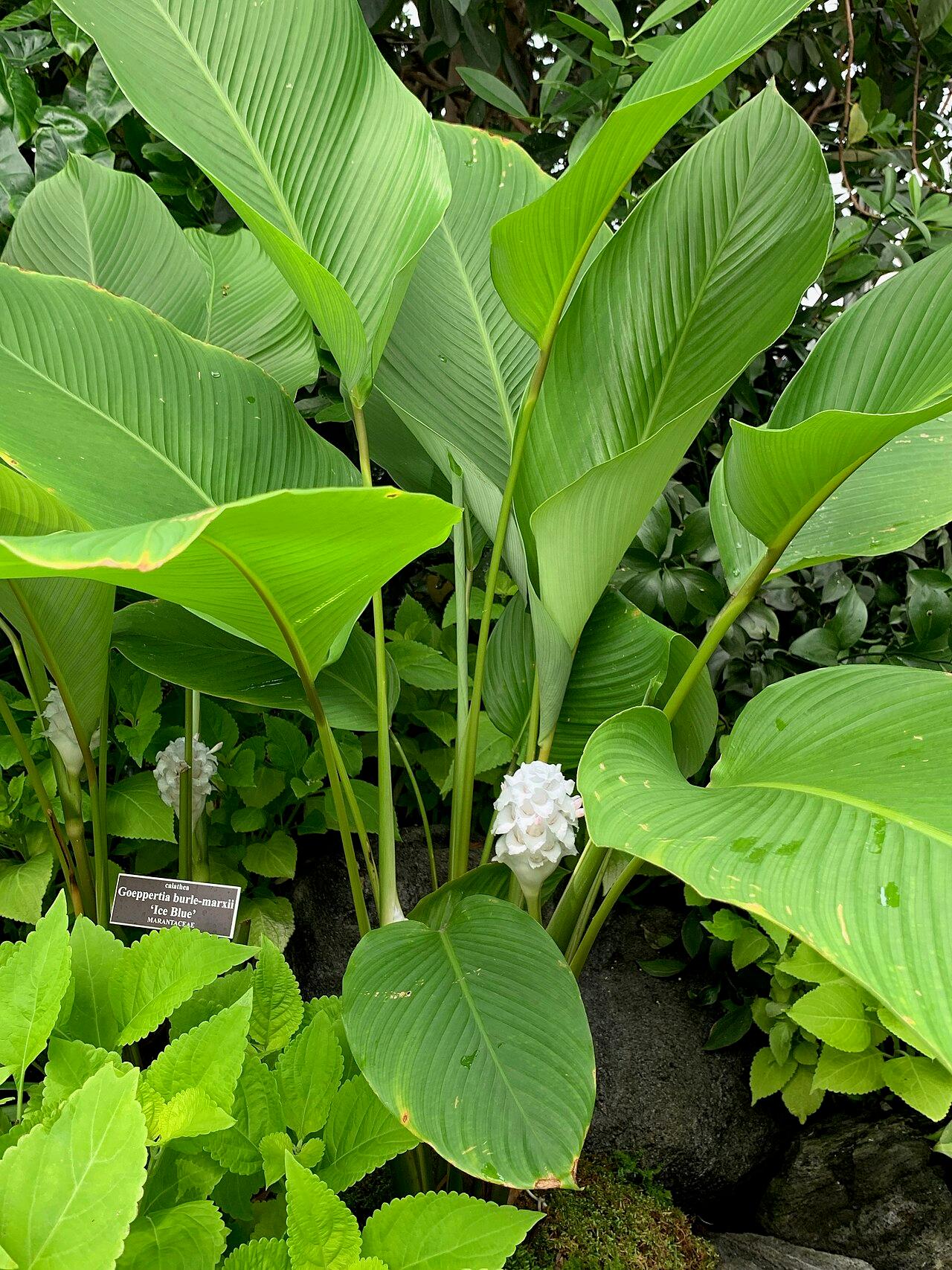
Photo: Goeppertia by KATHERINE WAGNER-REISS · CC BY-SA 4.0 · via Wikimedia Commons
01The family, and why the names moved
These are Marantaceae — prayer plants — from the humid forest floors of tropical South America. The group includes Maranta, Ctenanthe, Stromanthe and the plants everyone calls calatheas, most of which were reclassified into the genus Goeppertia in 2012. Shops still say Calathea, and nothing about their care changed, but it explains why labels and references disagree.
They all share the trait the common name refers to: a pulvinus, a small swollen joint at the base of each leaf that changes turgor through the day. Leaves lie flat to catch light by day and fold upright at night. It is genuinely visible, it happens over an hour or so at dusk, and it is a useful health signal — a plant that has stopped moving is usually under-lit or badly stressed.
Forest floor is the important part of the description. These plants evolved under a canopy, in permanently damp leaf litter, in still humid air, with rainwater. Every complaint about them is a version of one of those four conditions being absent.
02Water quality: the fix nobody mentions first
Marantaceae are unusually sensitive to dissolved minerals. Fluoride, chlorine, and the calcium in hard water all accumulate in the leaf tissue, and the plant deposits them where its transpiration stream ends — the leaf margins and tips. The result is the crisp brown edge that defines these plants' reputation.
This is why people who do everything else right still get browning. No amount of humidity fixes a water-quality problem, and the damage is cumulative: it builds over months and does not reverse on leaves already affected.
Use rainwater if you can collect it, or filtered water, or distilled. Letting tap water stand overnight helps only if your supply is treated with free chlorine — many are now treated with chloramine instead, which does not off-gas, and it does nothing at all for fluoride or hardness.
If you must use tap water, flush the pot thoroughly every couple of months: water slowly with several pot-volumes of water, letting each drain away, to carry accumulated salts out through the base.
03Water, light and warmth
The target is consistently moist medium that never becomes either soggy or dry. In practice: water when the top 2 cm are dry, thoroughly, and empty the saucer. That usually means every 4–7 days in summer and every 7–12 days in winter.
Letting one of these dry out completely is not recoverable in the way it is for a pothos. The plant wilts, the leaf edges die back permanently, and even after rewatering you are left with the damage for the life of that leaf. Consistency matters more than the exact interval.
Light should be bright but indirect — a north or east window, or well back from a brighter one. Direct sun bleaches the patterning that is the entire point of the plant, and in strong light the colours wash out within weeks. In too little light the leaves lose contrast in the other direction, and the nightly folding weakens.
Warmth is the underrated requirement. These are strictly tropical, unhappy below about 16°C, and damaged below 12°C. Cold roots in damp medium in a cool room is a reliable way to kill them, so keep them off cold windowsills in winter and away from draughts and doorways.
| Symptom | Most likely cause | Fix |
|---|---|---|
| Crisp brown leaf edges and tips | Minerals in tap water; salt build-up | Switch to rain or filtered water; flush the pot |
| Whole leaf yellowing, medium soggy | Overwatering, cold roots | Longer intervals, warmer position, check drainage |
| Curling leaves that do not relax at night | Too dry, at the root or in the air | Water; group plants or run a humidifier |
| Faded washed-out pattern | Too much direct light | Move back from the window |
| Fine pale stippling, leaves dulling | Spider mites — very common on these | Check undersides with a lens; treat promptly |
| Leaves no longer folding at night | Too little light, or serious stress | Move brighter and check the roots |
04Humidity, honestly assessed
These plants genuinely do want humidity — 50–60% suits them, and a heated room in winter can sit below 25%. Unlike most humidity advice on this site, here it is worth acting on.
What does not work is misting. It raises humidity for a couple of minutes, deposits mineral spots on patterned leaves that are the whole point of the plant, and on the dense crowns of Ctenanthe and Maranta it encourages fungal spotting.
What works, in ascending order: grouping several plants closely together; a wide tray of pebbles topped with water, with the pot standing above the waterline; moving the plant to a bathroom or kitchen; and a humidifier, which is the only method that reliably changes a whole room. A closed cabinet or terrarium is the extreme version and produces spectacular plants.
Before spending money, though, rule out water quality. In most homes, mineral damage accounts for more brown edges on these plants than dry air does — and the two look identical.
05Repotting, dividing and the ones worth starting with
Repot every one to two years in spring, one size up, into a mix that holds moisture without becoming heavy: a peat-free compost with about a quarter perlite and a little fine bark or coir works well. Shallow pots suit them, because the root systems are not deep.
Division is the only practical propagation. Cuttings do not work for Goeppertia — there is no node to root from — although Maranta and Ctenanthe can be rooted from stem cuttings taken below a node. To divide, unpot in spring, tease the clump apart where it separates naturally, keep several leaves and a good share of roots on each piece, and pot each snugly. Expect a month of sulking.
If you are starting out, the species are not equally difficult. Choosing well is worth more than any technique.
- Easiest — Maranta leuconeura (prayer plant) — The most forgiving of the family, tolerant of ordinary rooms, and the most dramatic night movement. Start here.
- Easy — Ctenanthe burle-marxii, Goeppertia lancifolia (rattlesnake plant) — Robust, tolerant of average humidity, and quick to recover from a missed watering.
- Moderate — Goeppertia orbifolia, G. makoyana — Large thin leaves that show every water-quality problem. Worth it, but use clean water from the start.
- Difficult — Goeppertia warscewiczii, G. white fusion — Variegated and thin-leaved, unforgiving of dry air and hard water. These are the ones that earn the family its reputation.
Frequently asked questions
- Why do the leaves curl up during the day?
- Daytime curling is a stress response, usually thirst or very dry air — distinct from the normal upward folding at night. Check the medium first, then the humidity.
- Are calathea and prayer plant the same thing?
- They are in the same family and behave similarly. 'Prayer plant' strictly means Maranta leuconeura, but it is used loosely for the whole group because they all fold their leaves at night.
- Can I save a leaf that has gone brown at the edge?
- No — the damaged tissue is dead and will not regrow. Trim it for looks, fix the cause, and judge your progress by the next leaf that unfurls.
- Do they need a terrarium or cabinet?
- Not for the easier species, which do fine in an ordinary room with clean water. For the thin-leaved variegated cultivars, an enclosed cabinet is genuinely the difference between struggling and thriving.
Lan Nguyen
Balcony grower & founding editor
Lan has kept ornamental plants on a 12 m² apartment balcony for eight years, mostly tropical foliage and small-scale bonsai. She writes the care and comparison guides here, and has killed enough plants to be specific about how.
Keep reading
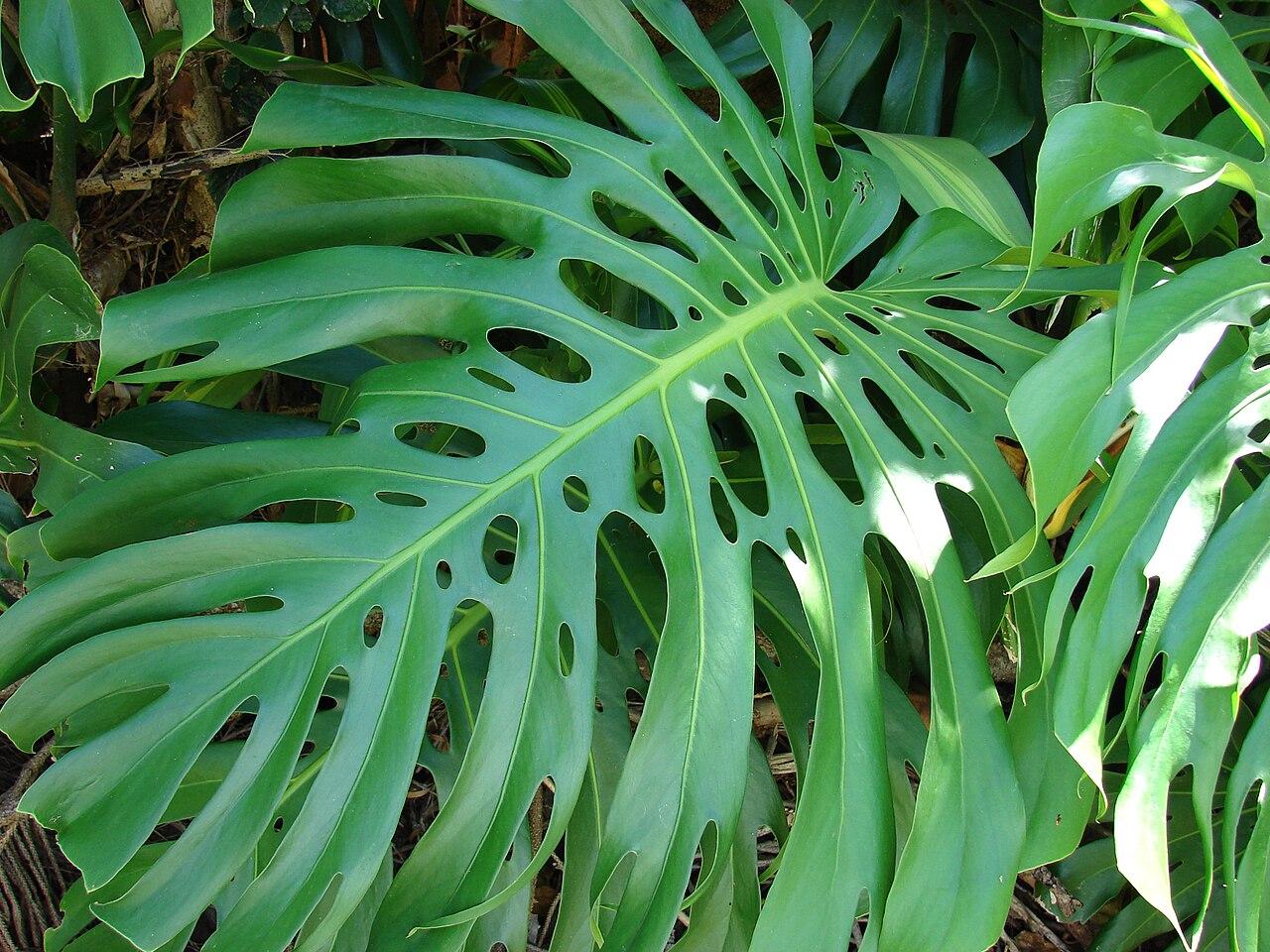
Monstera Deliciosa: How to Actually Get the Holes
The splits are not a matter of waiting. A monstera fenestrates when it is mature enough, lit well enough, and — the part everyone skips — climbing something. Two of those three are in your control.
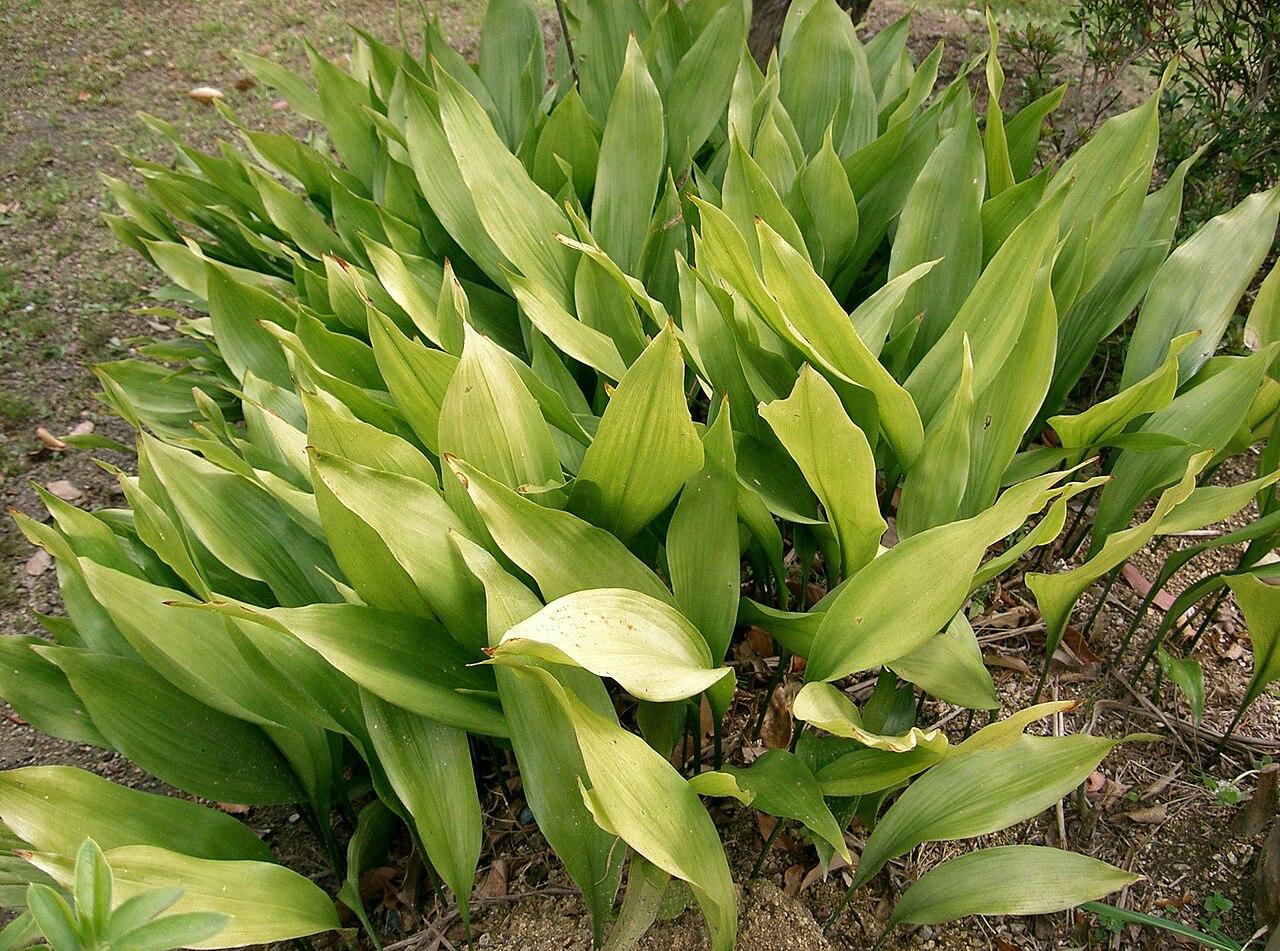
Nine Indoor Plants That Genuinely Tolerate Low Light
Most 'low light' lists are wishful thinking — half the plants on them need a bright window to look like the photo. These nine actually hold up a few metres from the glass.
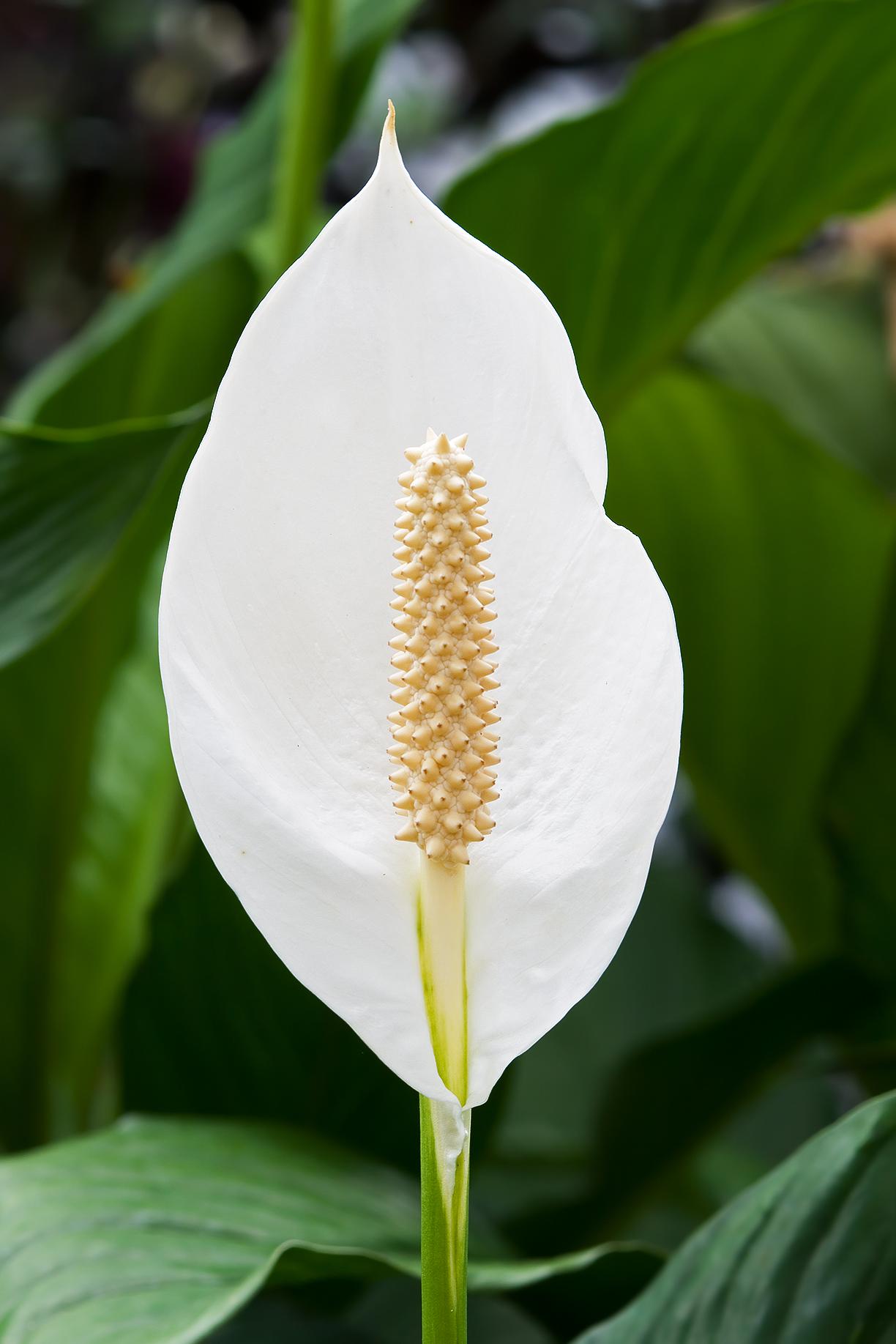
Peace Lily Care: The Plant That Tells You When It's Thirsty
Spathiphyllum droops theatrically the moment it runs low on water and perks back up within hours. That feedback loop makes it the best teaching plant there is — as long as you don't take the drooping as a schedule.