Bottom Watering vs Top Watering: Which, and When
Bottom watering has become the default recommendation online, and it does solve real problems. It also creates one that nobody mentions, and the fix is to stop doing it occasionally.
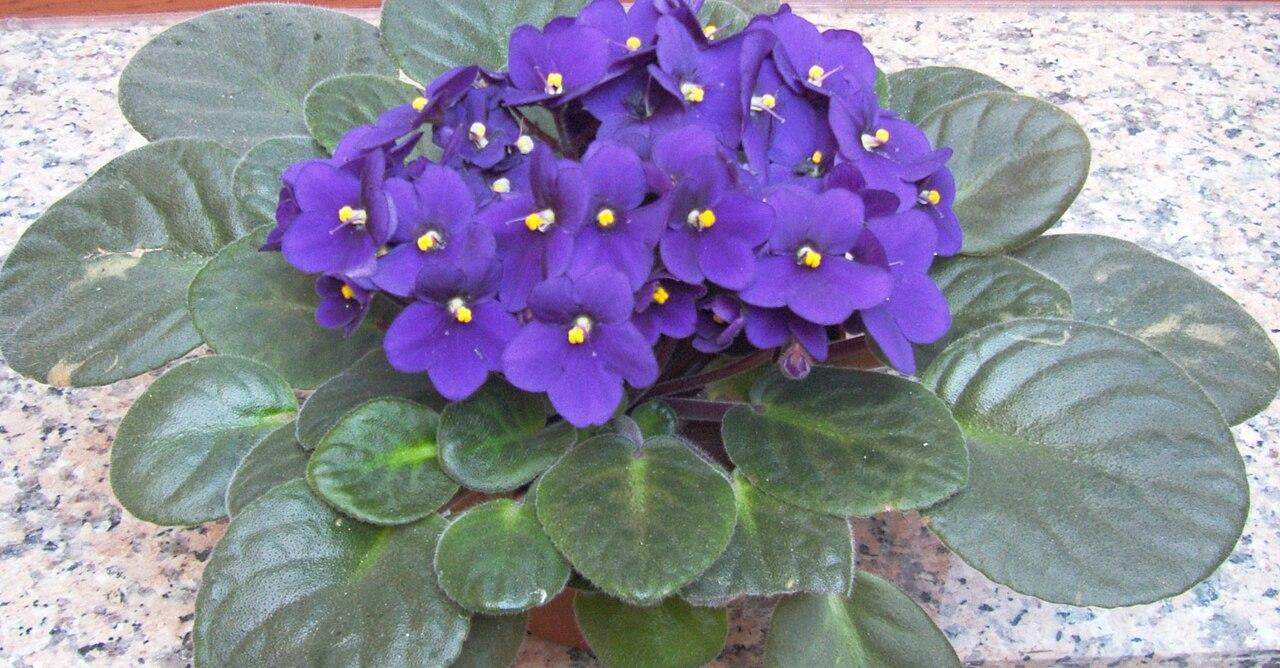
Photo: Saintpaulia by RobertoMM · CC BY-SA 3.0 · via Wikimedia Commons
01What each method actually does
Top watering means pouring water onto the surface of the medium until it runs from the drainage hole. Water travels downward through the pot, wetting what it passes and carrying dissolved material with it, and the surplus leaves through the base.
Bottom watering means standing the pot in a few centimetres of water and letting capillary action draw it upward through the medium. Water moves from the bottom of the pot toward the top, and nothing leaves.
That difference in direction is the whole comparison. Top watering flushes; bottom watering does not. Top watering wets the surface first and the base last; bottom watering does the reverse. Everything else follows from those two facts.
Both methods, done properly, thoroughly wet the root ball. Neither is a shortcut, and neither changes how often the plant needs water — that is set by the plant, the light and the medium, not by how the water arrives.
02The case for bottom watering
It solves the hydrophobic compost problem completely. Peat-based compost that has dried out repels water, so top watering runs down the gap at the pot wall and out of the drainage hole while the root ball stays dry. Standing the pot in water bypasses this entirely — capillary action pulls water into the dry medium rather than over it.
It wets the whole root ball evenly. Top watering, done in a hurry, often wets the top third and leaves the bottom dry. Bottom watering cannot do this, because the water starts at the bottom.
It keeps the surface dry, which matters more than it sounds. Fungus gnats lay their eggs in the top two or three centimetres of damp medium, and a surface that stays dry between waterings interrupts their life cycle. For anyone with a recurring gnat problem, this alone is a reason to switch.
It keeps water off the foliage and out of the crown, which is essential for African violets and other fuzzy-leaved gesneriads that mark permanently where cold water sits, and for rosette plants where water in the centre causes crown rot.
And it is harder to overwater in one sense: the plant takes what it can hold and no more, provided you remove it from the tray when it stops absorbing.
03The problem nobody mentions
Water carries dissolved salts — from fertiliser, from hard tap water — and those salts have to go somewhere. When you top water thoroughly, they leave through the drainage hole with the surplus. When you bottom water, they cannot leave, so they travel upward with the water and are deposited at the top of the pot as it evaporates.
Over months this produces a genuine accumulation in the upper layer of the medium, which is often visible as a white or yellowish crust on the surface and around the rim. The consequences are the classic salt symptoms: brown crisp leaf tips and margins, reduced growth, and roots damaged by the raised salt concentration in the zone where many of the fine feeder roots sit.
This is not a reason to avoid bottom watering. It is a reason not to bottom water exclusively, and the fix takes a minute.
Every fourth or fifth watering, top water thoroughly instead — slowly, with two or three pot-volumes of water, letting it drain right through and discarding the run-off. That single habit carries the accumulated salts out and resets the pot.
It is also worth top watering when the surface crust is visible, whenever you have been feeding regularly, and always if you water with hard tap water.
| Situation | Method | Why |
|---|---|---|
| Recurring fungus gnats | Bottom | Keeps the surface layer dry where larvae live |
| Compost has dried out and repels water | Bottom | Capillary action rewets what pouring cannot |
| African violet, gloxinia, fuzzy leaves | Bottom, always | Cold water on the leaves leaves permanent pale marks |
| Echeveria, rosette succulents | Bottom or careful base watering | Water in the crown causes rot |
| You feed regularly | Mostly bottom, top every 4th time | Flushing accumulated fertiliser salts |
| Hard tap water area | Top, mostly | Minerals accumulate quickly and need flushing out |
| Very large or heavy pots | Top | Bottom watering is impractical above a certain size |
| Plants in a decorative cachepot | Top, at the sink | Drain fully before returning it to the cover |
04Doing each one properly
For bottom watering: stand the pot in a tray, sink or bowl with 2–5 cm of tepid water — enough to reach the bottom third of the pot, not to submerge it. Leave it 15–30 minutes. Check the surface of the medium; when the top has darkened with moisture, it is done. Lift it out, let it drain for a few minutes, and return it. If the water has not been absorbed after 30 minutes, the plant did not need it.
For top watering: pour slowly and evenly across the whole surface, not in one spot, and continue until water runs freely from the drainage hole. Wait a minute and repeat — the first pass often runs down the pot wall, and the second is what actually soaks the medium. Then empty the saucer or cachepot completely.
Two details apply to both. Use tepid water rather than cold, particularly for tropical plants and especially for African violets. And judge the interval by the medium, not by the method — checking with a finger or a skewer is what decides when to water, regardless of how you then do it.
One caution specific to bottom watering: if a plant has fungus gnats or any soil-borne problem, do not share a tray between pots. Standing several pots in the same water spreads whatever is in one of them to all of them.
05The verdict
Bottom water as the routine for small and medium pots, especially if you have fungus gnats, dry-out-prone compost, or plants that mark when their leaves get wet. It is more reliable at wetting the root ball evenly, and it removes a class of common errors.
Top water thoroughly every fourth or fifth time to flush accumulated salts, and top water as the default if you live in a hard-water area or feed heavily.
For large pots, top watering is the only practical option, and that is fine — the flushing it provides is one of its advantages.
The most important point is the one the debate obscures: how you water matters much less than whether you water thoroughly and at the right interval. A plant soaked properly once a week by either method will do far better than one given a splash every three days by whichever method is currently fashionable.
Frequently asked questions
- How long should a pot sit in water?
- Fifteen to thirty minutes. Small pots absorb in ten; large ones may need forty. Judge by the surface darkening rather than by the clock, and take the pot out once it stops taking water up.
- Can I bottom water succulents?
- Yes, and it works well — it wets the root ball without splashing the rosette. Just make sure the medium dries out completely afterwards, which is the part that actually matters for succulents.
- Will bottom watering stop fungus gnats on its own?
- It interrupts their breeding by keeping the surface dry, which reduces the population considerably over a few weeks. For an established infestation, combine it with sticky traps and a BTI or nematode drench.
- Is bottom watering better for the roots?
- It encourages roots to grow downward toward the water, which is a mild advantage. The larger effect is even wetting, which matters most in pots that have dried out hard.
Lan Nguyen
Balcony grower & founding editor
Lan has kept ornamental plants on a 12 m² apartment balcony for eight years, mostly tropical foliage and small-scale bonsai. She writes the care and comparison guides here, and has killed enough plants to be specific about how.
Keep reading
Liquid vs Slow-Release Fertiliser: Which Suits Your Habits
One gives you control and demands attention. The other runs by itself and releases faster when the room gets warm. Choosing badly is how people end up with salt-burnt roots or a plant that has been unfed for a year.
Succulents vs Cacti: Which One Actually Belongs Indoors?
They sit on the same shelf at the garden centre and get sold with the same care card, but succulents and cacti want noticeably different amounts of light. Picking wrong is why one of them is stretching.
Terracotta vs Plastic Pots: Does It Really Change Anything?
Terracotta is the aesthetic default and plastic is what your plant arrived in. The difference is not decorative — it changes how fast the medium dries, which changes your entire watering routine.