Starting a Bonsai from Nursery Stock, Cheaply
A finished bonsai costs what a piece of furniture costs. A shrub from the back of a garden centre costs the price of lunch, and the trunk you can find in one is often better than anything at that price in a bonsai pot.
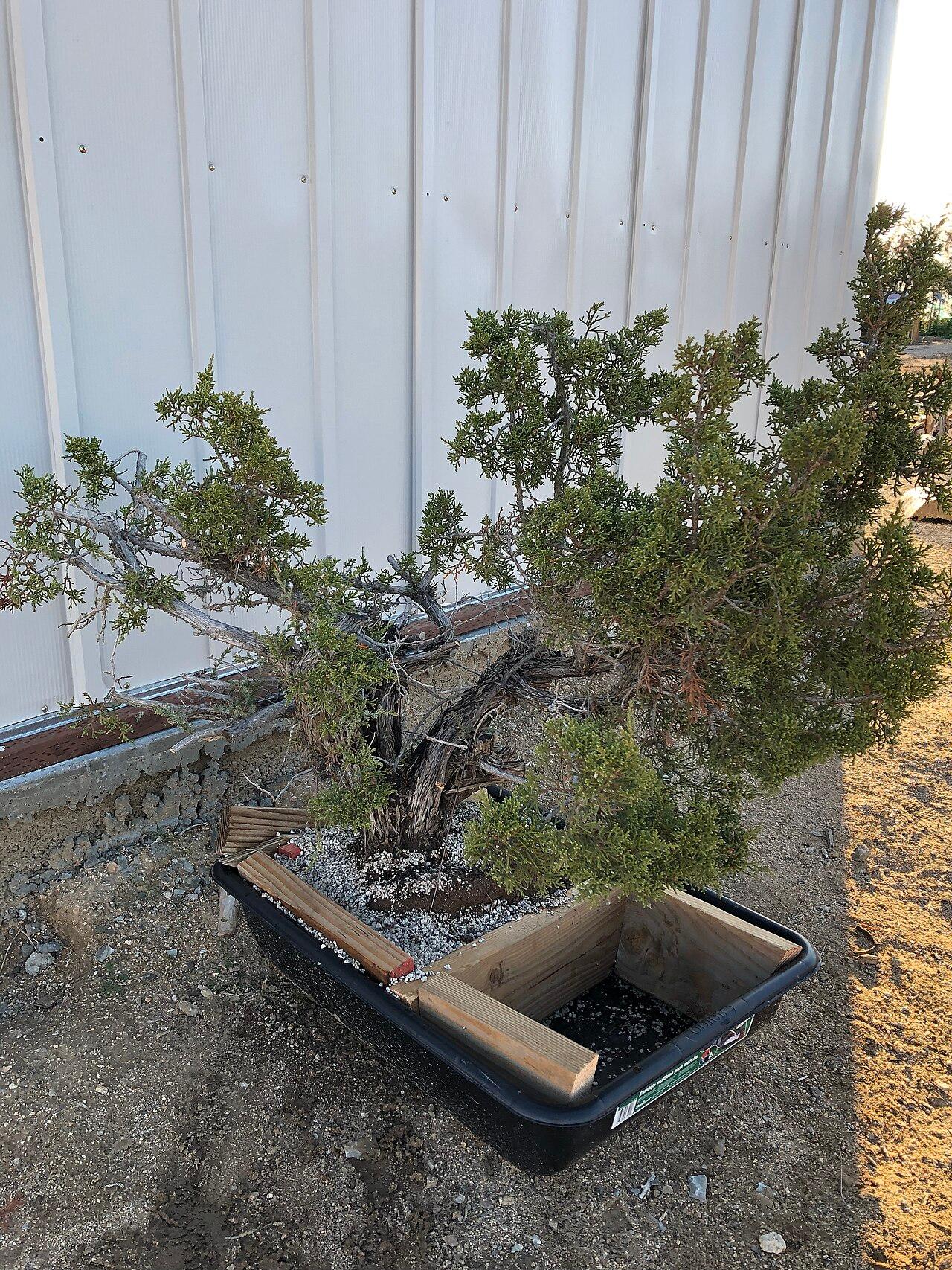
Photo: Bonsai in training by Nathan Andersen · CC BY-SA 4.0 · via Wikimedia Commons
01Why nursery stock beats a cheap bonsai
The trees sold as inexpensive bonsai are young plants grown fast, styled minimally, and potted in a ceramic tray to make the sale. The trunk is usually a pencil-thick stem with no taper, no movement and no surface roots, and no amount of skill will make it look old, because trunk character is the one thing that cannot be added later.
A landscape shrub in a large plastic pot at a garden centre has been grown hard for several years in a big volume of soil, which is precisely the condition that thickens trunks. For the same money or less you get a stem two or three times as thick, often with interesting movement forced on it by pruning in the nursery, and a root mass big enough to survive heavy work.
The trade-off is that it looks nothing like a bonsai when you buy it. It is a two-metre shrub with foliage everywhere and the interesting part buried under it. Learning to see the tree inside is most of the skill, and it is a skill that improves quickly with practice.
The best time to look is late winter and early spring, when deciduous stock is bare and every line of the trunk and branches is visible. Garden centres also discount unsold, overgrown and pot-bound stock — exactly the plants that make the best material.
02What to look for, in order
Assess in a fixed order, because the things you cannot fix come first and the things you can fix come last. Most beginners do it backwards and buy a plant with beautiful foliage on a featureless stem.
- 1. The base and surface roots — Scrape the soil back at the trunk in the shop. You want roots radiating evenly outwards and a trunk that widens where it enters the soil. A stem that goes into the ground like a broom handle, or roots emerging from one side only, is a serious defect and slow to correct.
- 2. Trunk thickness and taper — Thicker is better, and the trunk should narrow steadily from base to top. A trunk of even width for a metre reads as a stick regardless of what you do above it.
- 3. Movement in the lower trunk — Curves, bends and lean in the bottom third are what give a tree character. The lower trunk can rarely be changed after purchase, so it must already be interesting.
- 4. Low branches — You need at least one usable branch reasonably low on the trunk. Everything above can be regrown; a first branch three-quarters of the way up forces a very tall tree.
- 5. Bark and scars — Mature or textured bark is a bonus. Large old wounds low on the trunk are a problem, although they can sometimes be converted into deadwood features on suitable species.
- 6. Foliage — last — Everything visible above the branches will mostly be cut off. Do not choose on the shape of the canopy.
03The first year: do less than you want to
The temptation on getting a shrub home is to cut it into a bonsai the same afternoon. Resist it. A plant that has just been bought has been through a nursery, a lorry and a shop, and the fastest way to lose it is to reduce the roots and the foliage in the same week.
In the first season, do only structural branch selection, and only if the plant is clearly healthy. Remove obviously unwanted major branches — anything growing straight down, crossing the trunk, or emerging opposite another branch at the same height — and leave everything else. Keep more than you think you need; you can always cut later, and extra foliage feeds the root recovery.
Leave the roots entirely alone in year one. Repot it, at most, into a larger plastic training pot with better-draining soil if the existing medium is a wet peat block. Sacrificing thickness is not a concern yet, and a large pot is what continues to thicken the trunk.
Feed it well through that first season. The goal for year one is a vigorous plant, not a beautiful one.
04Years two to five: alternate the insults
From the second spring, the work alternates. Do root work in one season and heavy top work in another, so the tree is never recovering from both at once. The usual pattern is root reduction in early spring as buds swell, and branch work in the following late spring or summer once the tree is growing strongly.
Root reduction happens in stages. A nursery shrub has a deep coarse root system entirely unsuited to a shallow pot, and it cannot be converted in one go. Each spring, remove the bottom portion of the root mass and work the sides back, taking no more than a third at a time, until you have a flat pad of fine roots. This typically takes two or three cycles.
Meanwhile the top is developed by grow-and-cut. Let a shoot run freely for a season to thicken the branch it is on, then cut it back hard to a short stub with a bud or two. Free growth builds thickness; cutting back builds taper and ramification. Doing only one of the two gives you either a thin twiggy tree or a coarse one.
Wire branches into position while they are young and flexible, and check the wire every few weeks in the growing season — nursery stock grows fast and wire bites in quickly.
| Year | Roots | Top | Pot |
|---|---|---|---|
| 1 | Leave alone | Remove obviously unwanted major branches | Plastic training pot or original |
| 2 | First reduction — remove the bottom third | Let leaders run to thicken chosen branches | Large training pot |
| 3 | Second reduction; begin flattening the pad | Hard cut-back; start wiring structure | Training pot |
| 4 | Light reduction; refine the nebari | Grow and cut for taper and ramification | Training pot or grow box |
| 5 | Fit to a bonsai pot | Build fine branching | First bonsai pot |
05The mistakes that cost the most time
Potting too early is the biggest one. A bonsai pot restricts the root system, and a restricted root system stops the trunk thickening almost entirely. Every year in a bonsai pot is a year the trunk does not grow. Keep material in a large training pot, a grow box or the ground until the trunk is the thickness you actually want, and only then reduce it into a display pot.
The second is removing too much foliage too early. Foliage is what powers root recovery and trunk thickening. A tree stripped to a stick in its first year has nothing to grow with, and even if it survives it sits still for two seasons.
The third is choosing material for its top. Beginners buy the shrub that already looks like a tree, which is usually a thin whip with a tidy canopy. Experienced growers buy the ugly, overgrown, misshapen plant with a thick base, because everything above the first branch is temporary anyway.
The fourth is impatience with the timeline. From garden-centre shrub to something recognisably a bonsai is three to five years, and to something genuinely good, ten. That is not a discouragement — it is the reason the hobby is worth doing, and a tree developed this way is worth far more than one bought finished.
Frequently asked questions
- Can I dig a tree up from the wild instead?
- Collected trees — yamadori — can be exceptional material, but they need permission from the landowner, correct timing, and much greater aftercare skill. Start with nursery stock, and try collecting once you have kept trees alive for a few years.
- How thick should the trunk be before potting it?
- Judge by proportion rather than by measurement: a trunk roughly a sixth to a tenth of the tree's final height reads convincingly. In practice most people pot far too early.
- Can I plant it in the ground to thicken it faster?
- Yes, and it is the fastest method by a wide margin. Plant it over a flat tile to force roots outwards rather than down, and lift it every two years to keep the root system manageable.
- What if I cut off the wrong branch?
- On a species that back-buds well, very little is permanent — new shoots appear and you choose again. That forgiveness is exactly why the species list above matters more than any single decision.
Lan Nguyen
Balcony grower & founding editor
Lan has kept ornamental plants on a 12 m² apartment balcony for eight years, mostly tropical foliage and small-scale bonsai. She writes the care and comparison guides here, and has killed enough plants to be specific about how.
Keep reading
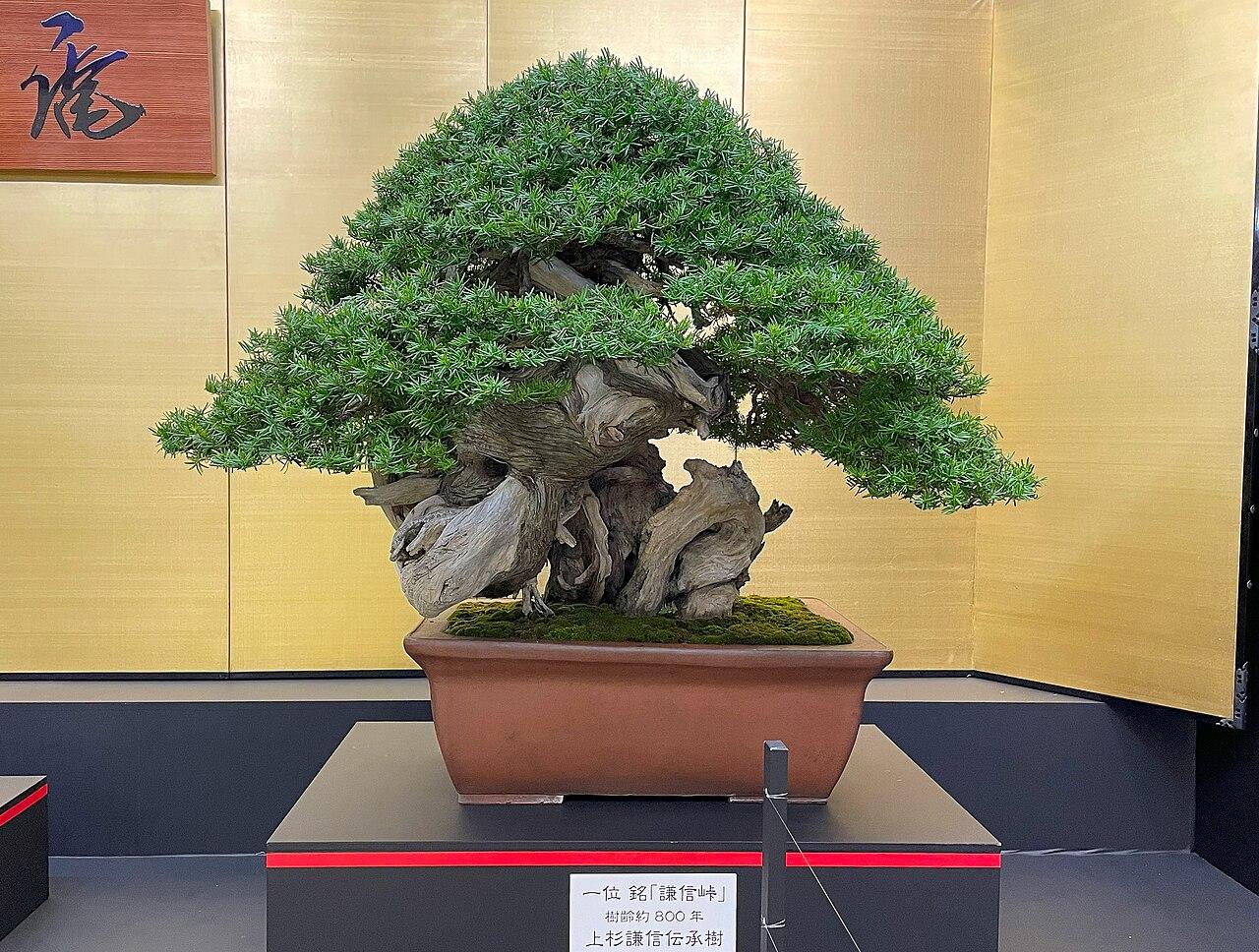
Choosing Your First Bonsai: What Actually Matters
Most first bonsai die within a year, and it is almost never a styling failure. It is buying a tree that cannot live where you intend to keep it.
Bonsai Wiring: How to Shape a Branch Without Scarring It
Wire is how a bonsai gets its shape, and it is also how beginners permanently mark a trunk. The technique is not difficult — the timing and the removal are what people get wrong.
Watering Bonsai: The Skill That Decides Everything Else
A bonsai holds perhaps a litre of open, fast-draining medium and carries a full-sized tree's worth of leaves on top of it. Nothing else you do matters if the watering is wrong, and no schedule survives contact with real weather.