Aphids and Whiteflies: The Two That Arrive on Something Else
Neither of these belongs indoors, which is exactly why they are easy to eliminate and easy to keep out. Both come in on a new plant, a bunch of flowers, or a pot that spent the summer outside.
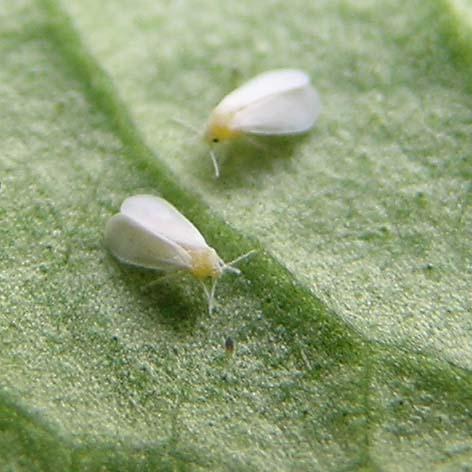
Photo: Whitefly by Unknown author · CC BY-SA 3.0 · via Wikimedia Commons
01Why these two are the easy ones
Aphids and whiteflies are the pests that most alarm people and least deserve it. Unlike scale and thrips, neither has a protected life stage — no armoured cover, no eggs sealed inside leaf tissue, no pupation in the potting medium out of reach of sprays. Everything is on the leaf surface, soft-bodied, and vulnerable to anything you apply.
They are also poorly adapted to indoor life. Both need a steady supply of soft new growth, and a mature houseplant in a lit room produces very little of that in most seasons. Outdoors they reproduce explosively because there is fresh growth everywhere; indoors a population usually fizzles once you remove the soft tips it is feeding on.
The reason they nevertheless show up is arrival, not establishment. Aphids fly, and the winged forms come in through open windows in warm weather. Both come home on new plants, on cut flowers — chrysanthemums, roses and gerberas are notorious — and on plants brought back in after a summer outdoors.
So the practical framing is different from the harder pests. With scale and thrips you plan a five-week campaign. With aphids and whiteflies you clean the plant, treat it two or three times, and then think about where they came from.
02Telling them apart, and from everything else
Aphids are 1–3 mm, pear-shaped, soft, and come in green, black, pink, grey or yellow depending on species. They sit in dense clusters on the softest tissue available — the growing tip, the undersides of new leaves, and above all flower stalks and buds. They are slow, they do not scatter when you approach, and they leave behind white cast skins that look like a scattering of dandruff.
Whiteflies are 1–2 mm, moth-like, with powdery white wings held roof-like over the body. Adults sit on the undersides of leaves and take off in a small white cloud when the plant is shaken — which is the single most reliable identification there is. The immature stages do not look like insects at all: they are flat, oval, translucent scales fixed to the leaf underside, and they are commonly mistaken for scale insects or for scarring.
Both excrete honeydew, and both therefore produce the same secondary symptoms: sticky leaves, sticky shelves and floors below the plant, and eventually black sooty mould growing on the residue. The mould does not attack the plant, but it blocks light, and it is very often the first thing anyone notices.
Damage itself is mild in the early stages: slowed growth, and distorted or cupped new leaves where sap has been drawn from expanding tissue. Aphids can also transmit plant viruses, which is a stronger reason to deal with them promptly than the direct damage would suggest.
| Aphid | Whitefly | Mealybug | |
|---|---|---|---|
| Size and shape | 1–3 mm, pear-shaped, soft | 1–2 mm, white moth-like adults | 2–4 mm, white and cottony |
| Where | New growth, buds, flower stalks | Leaf undersides | Leaf axils, stem joints, roots |
| Behaviour | Static clusters, slow | Flies up in a cloud when disturbed | Static, slow-moving |
| Honeydew | Yes, copious | Yes, copious | Yes |
| Gives itself away by | Clusters on tips; white cast skins | The cloud; flat oval scales underneath | Cottony masses |
03Getting rid of aphids
Start physically, because it is fast and it removes most of the population before any product is involved. Take the plant to a sink or shower and rinse the affected growth firmly with tepid water, holding the pot at an angle so the run-off does not soak the medium. Aphids are poor at re-attaching once dislodged, and a thorough rinse commonly removes 80–90% of them.
Then remove what the colony was living on. Aphids concentrate on the softest tissue, so pinching out a heavily infested growing tip or cutting off an infested flower stalk removes both the insects and the reason they are there. On flowering plants this is often the whole treatment.
Follow up with insecticidal soap or a light horticultural oil, covering the growing tips and the undersides of the surrounding leaves. Repeat every five to seven days for three applications — not because there are protected stages, but because you will always miss a few, and aphids reproduce without mating and give birth to live young, so a handful becomes a colony again within a fortnight.
Do not bother with a systemic. Aphids indoors are a fortnight's work with soap and water, and reaching for a neonicotinoid for them is disproportionate.
04Getting rid of whiteflies
Whiteflies take a little longer, because the adults fly away from whatever you are doing and return afterwards, and the immature stages on the leaf undersides are more tolerant of a rinse than aphids are.
Isolate the plant first — this matters more here than with aphids, because disturbing the plant sends adults straight to its neighbours. Then rinse the leaf undersides firmly to remove the sessile nymphs, which is the part of the population that actually matters.
Yellow sticky traps are genuinely effective against whitefly, not just as monitoring. Adults are strongly attracted to yellow, and a couple of traps placed at foliage height remove a large share of the flying population and tell you when the infestation is over.
Spray insecticidal soap or horticultural oil onto the leaf undersides — the tops are almost irrelevant — every five to seven days for four applications. Four is not arbitrary: whitefly eggs are not well controlled by contact sprays, so you are covering successive hatches over the roughly three to four week life cycle.
For a persistent infestation on a plant you want to keep, Encarsia formosa is a parasitic wasp sold specifically for whitefly and used routinely in commercial glasshouses. It is harmless, invisible in practice, and works well in a warm, well-lit room.
| Day | Aphids | Whiteflies |
|---|---|---|
| 0 | Isolate, rinse, remove infested tips and flower stalks | Isolate, rinse leaf undersides, put up yellow traps |
| 5–7 | Spray soap or oil on tips and undersides | Spray undersides |
| 12–14 | Inspect; spray again if any remain | Spray undersides |
| 19–21 | Inspect only | Spray undersides |
| 28 | Return to the collection if clean | Traps empty for a week means done |
05Keeping them out
Because neither pest establishes indoors easily, prevention is largely about arrival — and the entry points are few and identifiable.
Quarantine new plants for three to four weeks in a separate room, and inspect them properly on the way in: leaf undersides, growing tips, leaf axils and any buds. A cheap hand lens turns a guess into a decision.
Keep cut flowers away from houseplants. This is the single most under-appreciated route indoors, and a vase of supermarket chrysanthemums beside a shelf of plants for a week is an efficient transfer of both aphids and thrips.
Treat plants coming in from a summer outdoors as though they were new. Hose them down thoroughly, check them over, and keep them apart from the rest for a month before mixing them back in. Autumn is when most indoor infestations are actually seeded.
And keep the plants themselves unstressed. Soft, sappy, over-fertilised growth is measurably more attractive to aphids — high-nitrogen feeding produces exactly the tender tissue they prefer. Feeding at half strength, and not at all in winter, reduces the problem before it starts.
Frequently asked questions
- My plant is sticky but I cannot see any insects. What is it?
- Honeydew, from something. Check the leaf undersides and axils with a lens for whitefly nymphs, scale or mealybugs. Sticky leaves are never the plant's own doing.
- Will washing-up liquid work instead of insecticidal soap?
- It sometimes kills the insects and it frequently damages the plant — detergents strip the leaf cuticle in a way that horticultural soaps are formulated not to. It is not worth the saving.
- Do ladybirds work indoors?
- Not really. They need more space and prey than a room provides and they leave or die. Encarsia for whitefly and Aphidius for aphids are the biological controls designed for enclosed spaces.
- How do I get rid of the black sooty mould?
- Deal with the insects first, since the mould feeds on their honeydew. Then wipe the leaves with a damp cloth and a little mild soapy water. It comes off with patience and does not need a fungicide.
Lan Nguyen
Balcony grower & founding editor
Lan has kept ornamental plants on a 12 m² apartment balcony for eight years, mostly tropical foliage and small-scale bonsai. She writes the care and comparison guides here, and has killed enough plants to be specific about how.
Keep reading
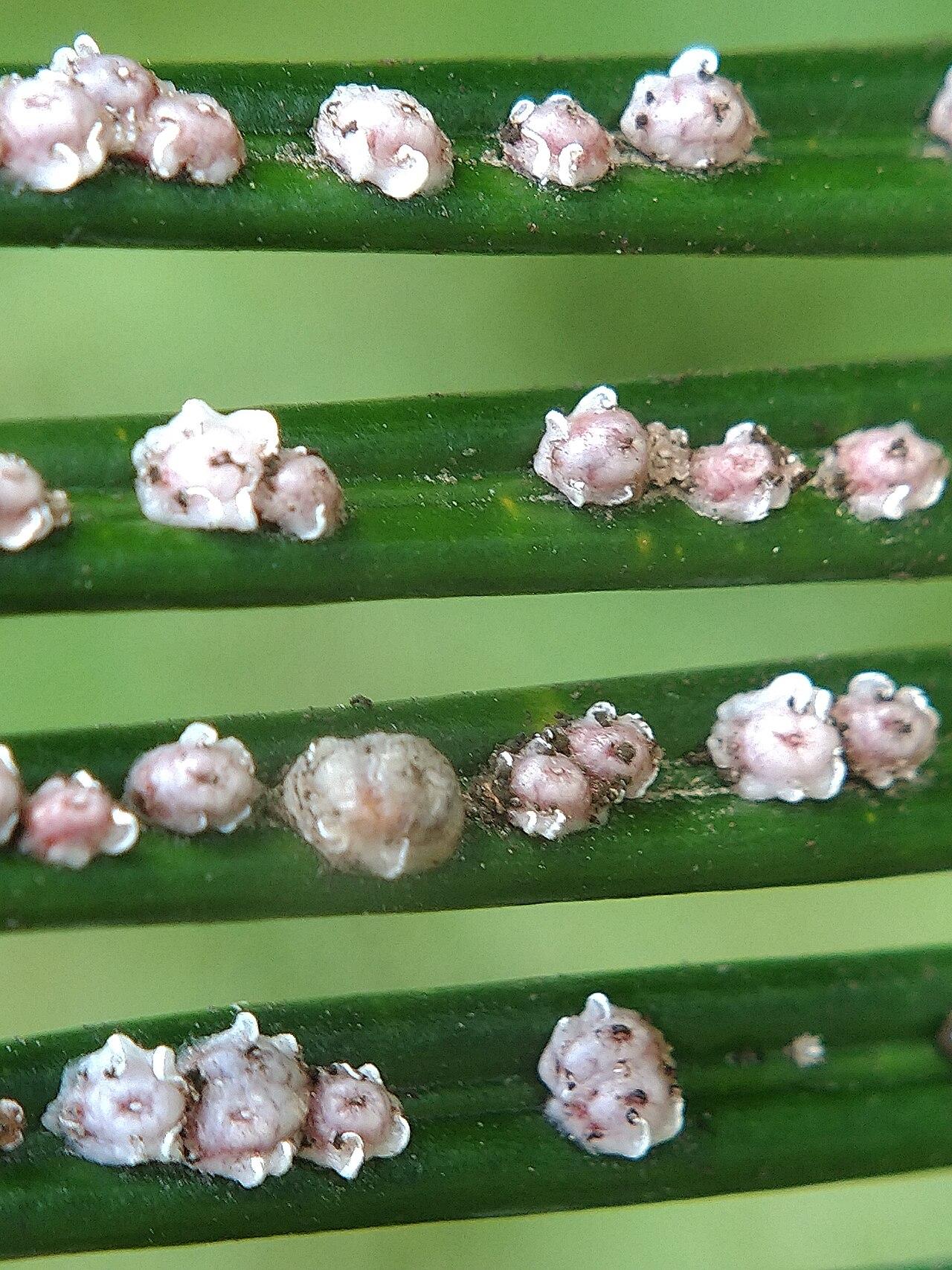
Scale and Thrips: The Two Pests That Get Found Too Late
Mites and mealybugs are visible and vulnerable. These two are neither — scale sits under a waterproof cover and thrips spend half their life inside the leaf and in the pot. Both need a different approach from a bottle of soap.
When It Isn't a Pest: Sunburn, Oedema, Chill and Salt Damage
A large share of the damage people spray for was never caused by anything living. These marks have a cause, a diagnosis and a fix — and none of them involve a bottle.
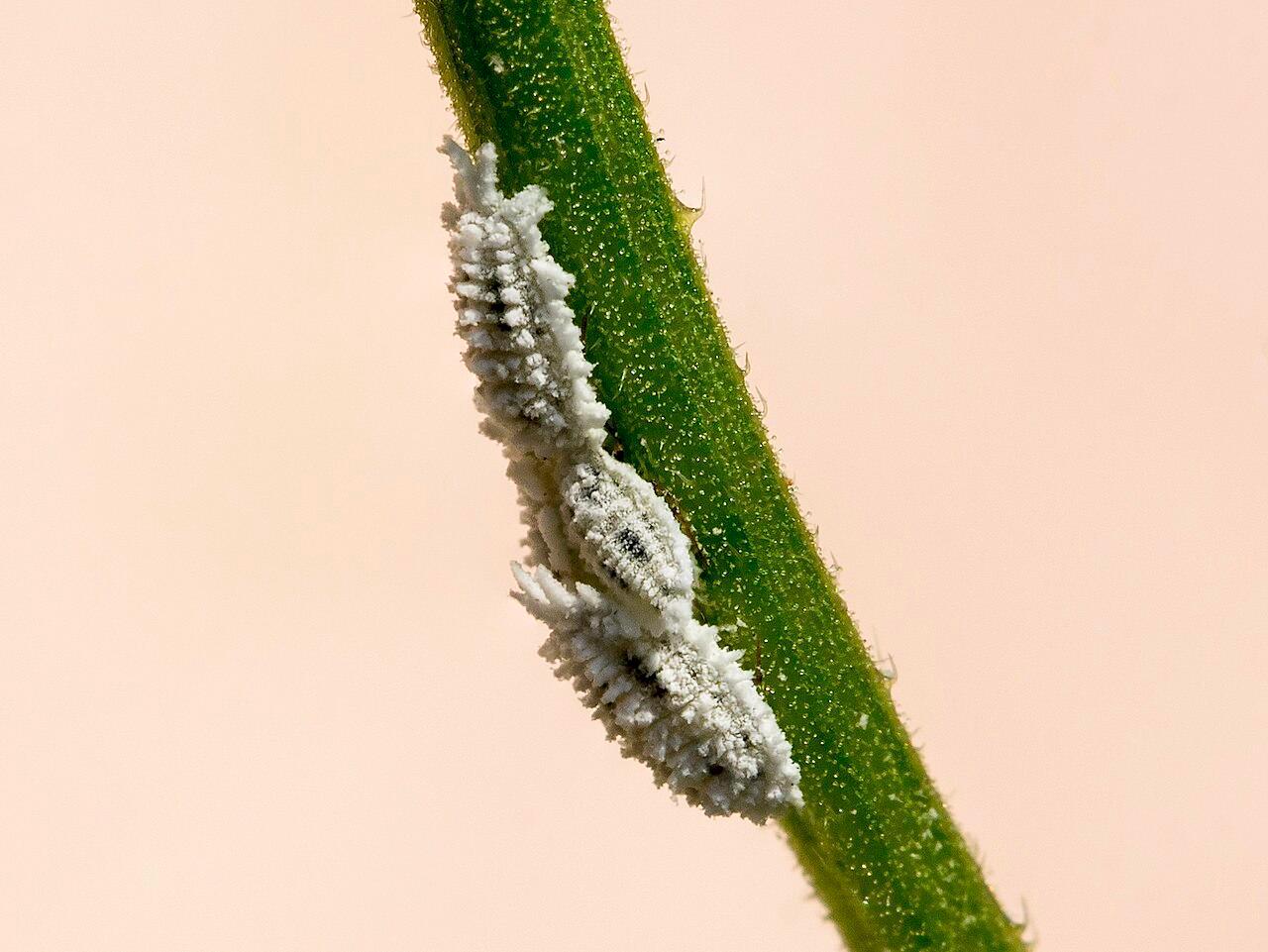
Spider Mites vs Mealybugs: Identify It Before You Spray
These are the two pests you are most likely to meet indoors, and the treatments barely overlap. Getting the identification right saves weeks of the wrong approach.